



















Content ITV PRO
This is Itvedant Content department
Learning Outcome
5
Analyze scalability benefits of stateless authentication
4
Understand JWT structure and signature verification
3
Identify problems with traditional session authentication
2
Explain JWT authentication workflow in Spring Security
1
Understand stateful and stateless authentication differences
In the previous lecture, we understood how stateless authentication using JWT works....
JWT helps the application identify:
But after identifying the user, another important question arises:
Should every user access everything
Should a normal user delete data
Should admin features be public
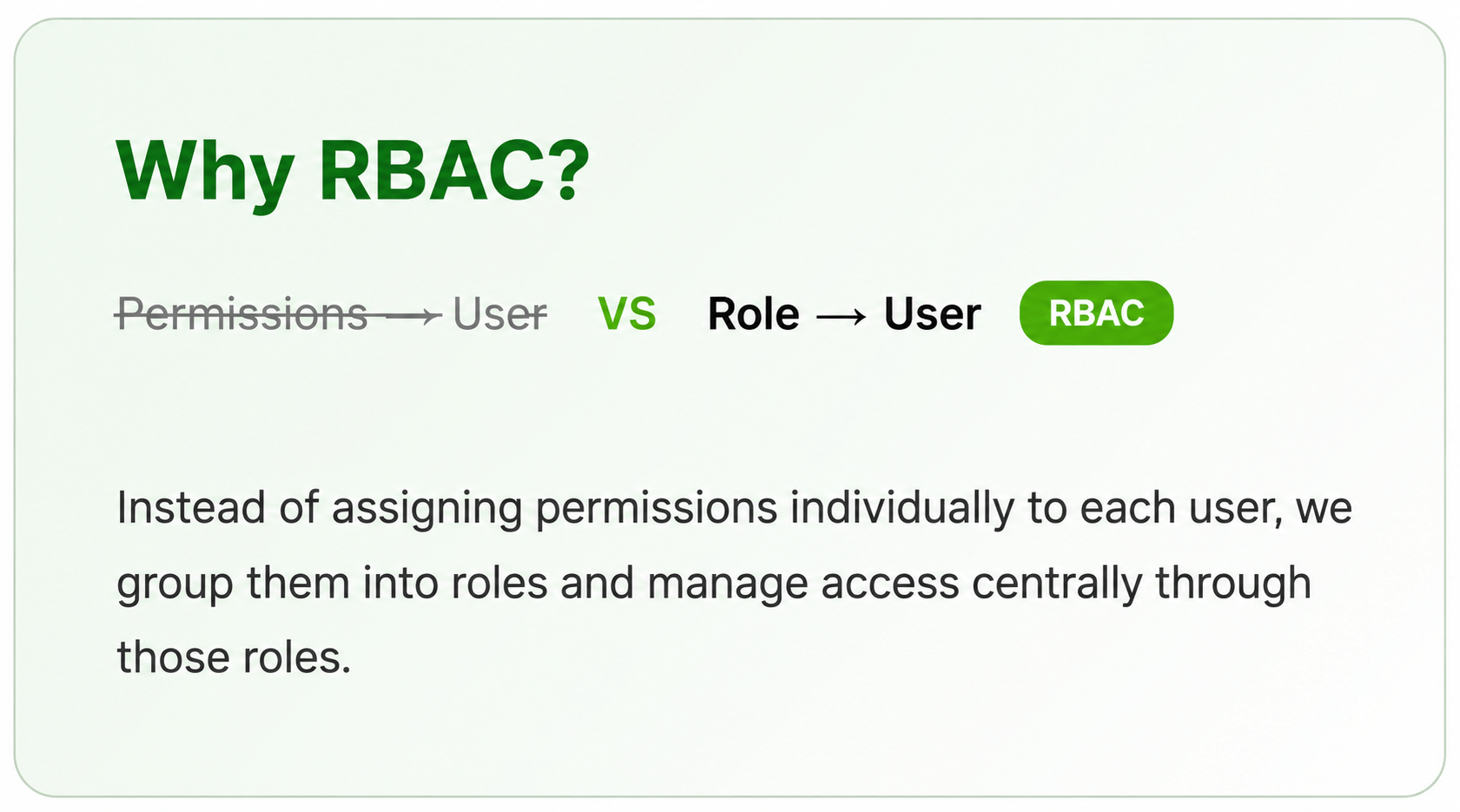
It is commonly handled using: RBAC (Role based access control)
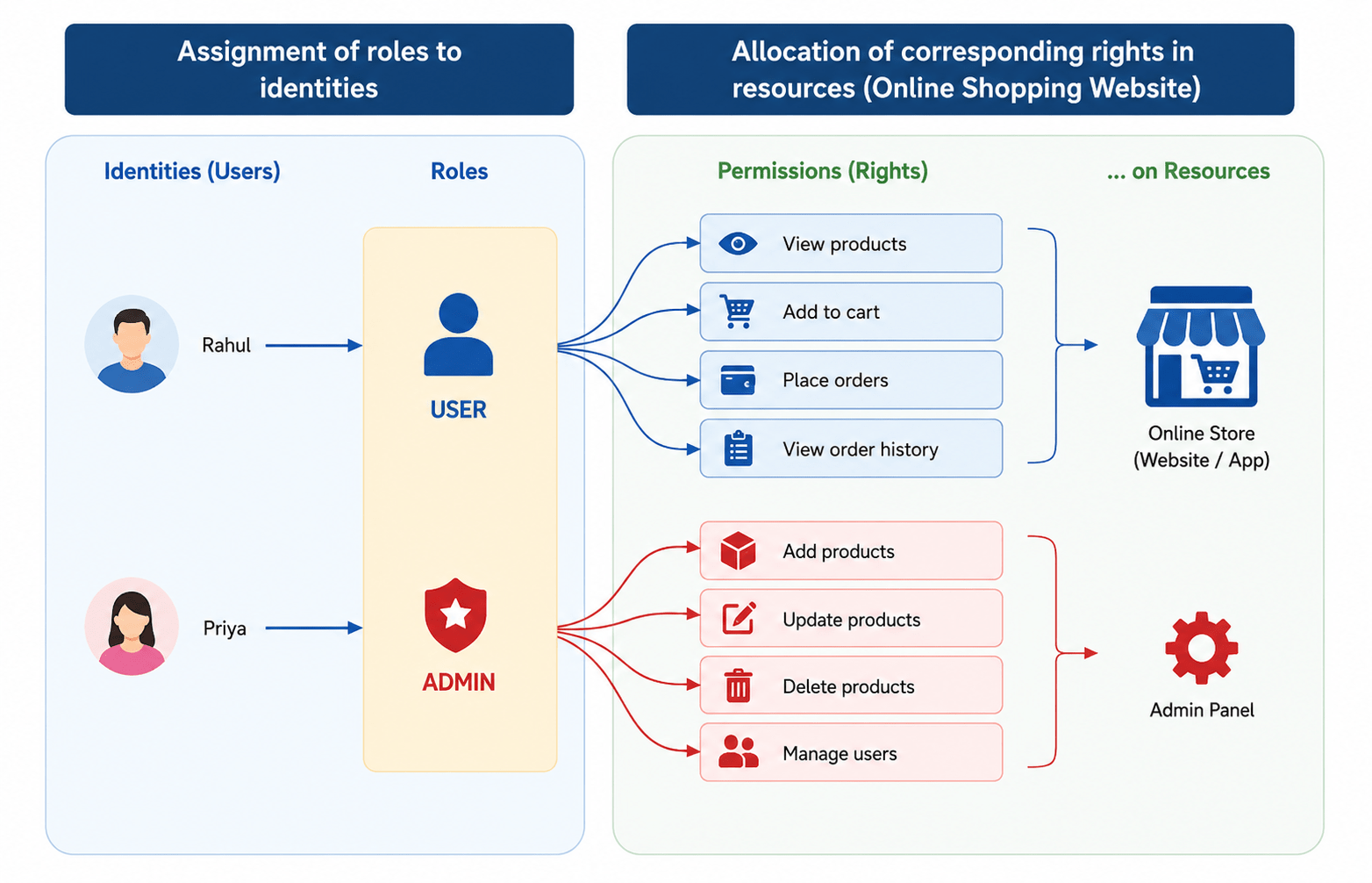
Users are assigned roles
Roles define allowed actions
Manage access through roles
Granular control
Better scalability
Precise access management
Limited flexibility
Hard to customize access
All-or-nothing approach
Real systems often use Roles + Permissions together
Convention
Roles must start with ROLE_
Example
Internally
hasRole("ADMIN") checks for
ROLE_ADMIN
http.authorizeHttpRequests(auth ->
    auth.requestMatchers("/admin/**")
        .hasRole("ADMIN") // Checks ROLE_ADMIN
);
GrantedAuthority authority =
    new SimpleGrantedAuthority("ROLE_ADMIN");
Summary
5
JWT reduces dependency on centralized server sessions
4
Signature verification ensures token integrity and trust
3
Tokens securely carry identity and permission details
2
JWT enables scalable and stateless authentication systems
1
Sessions require continuous server-side user storage
Quiz
A. Requires server-side session storage
B. Supports only single-server applications
C. Enables stateless and scalable authentication
D. Stores passwords inside the token
What is the main advantage of JWT
authentication?
What is the main advantage of JWT
authentication?
A. Requires server-side session storage
B. Supports only single-server applications
C. Enables stateless and scalable authentication
D. Stores passwords inside the token
Quiz-Answer
By Content ITV