






















Content ITV PRO
This is Itvedant Content department
Learning Outcome
5
Apply the concept to real-world networking scenarios
4
Describe how routing decisions change dynamically
3
Explain how routers choose the best path
2
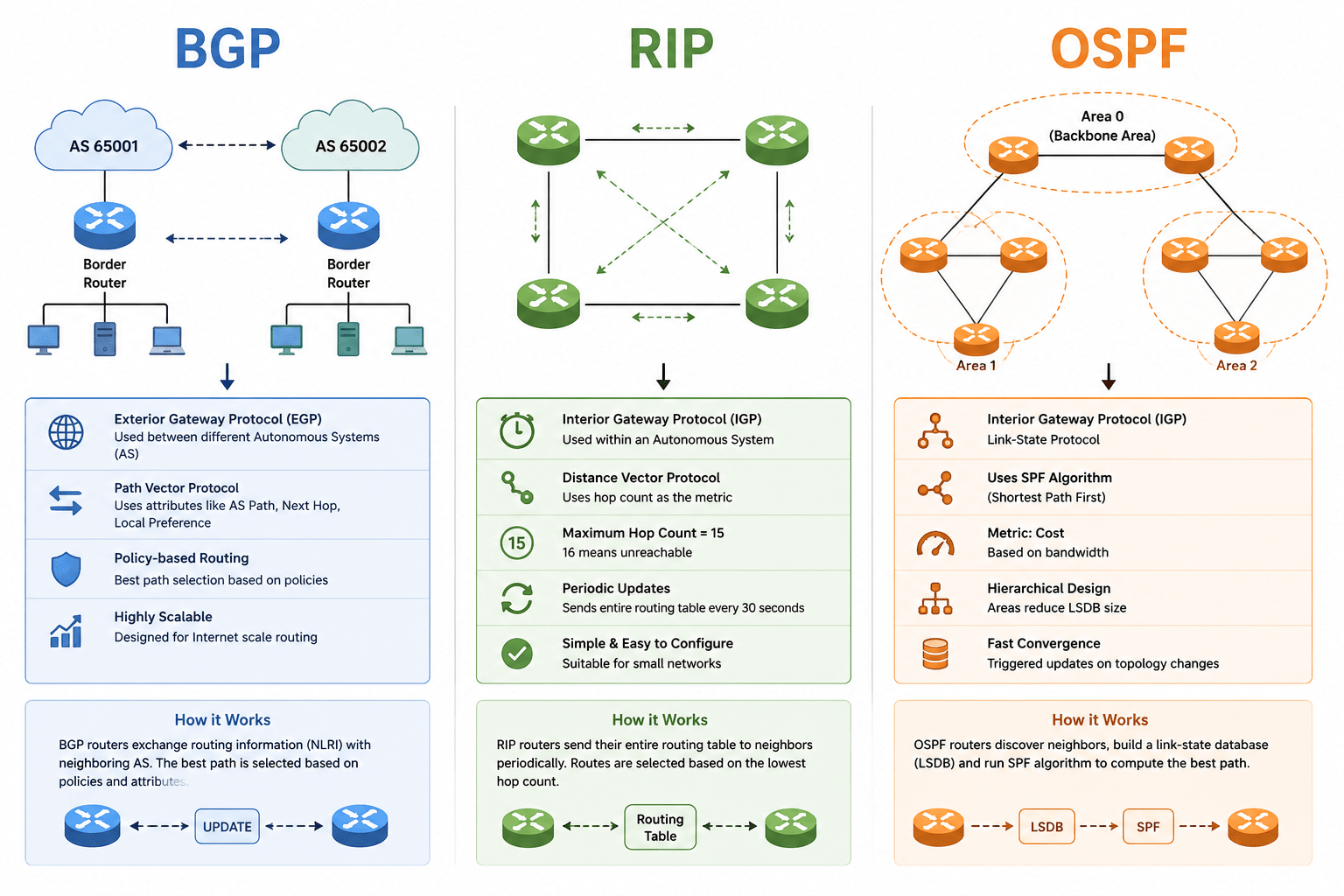
Differentiate between types like RIP, OSPF, and BGP
1
Understand what a routing protocol is and why it is needed
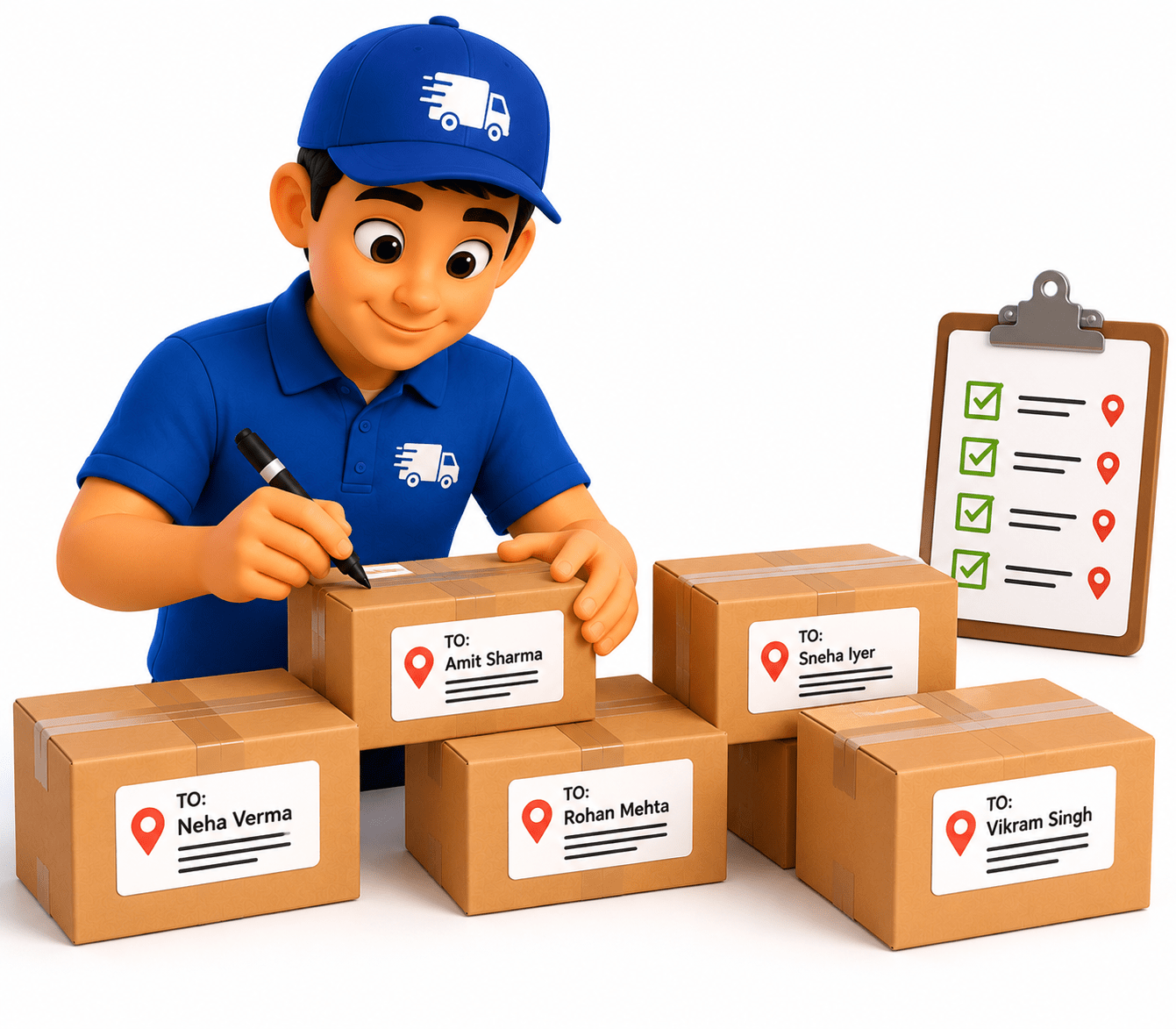
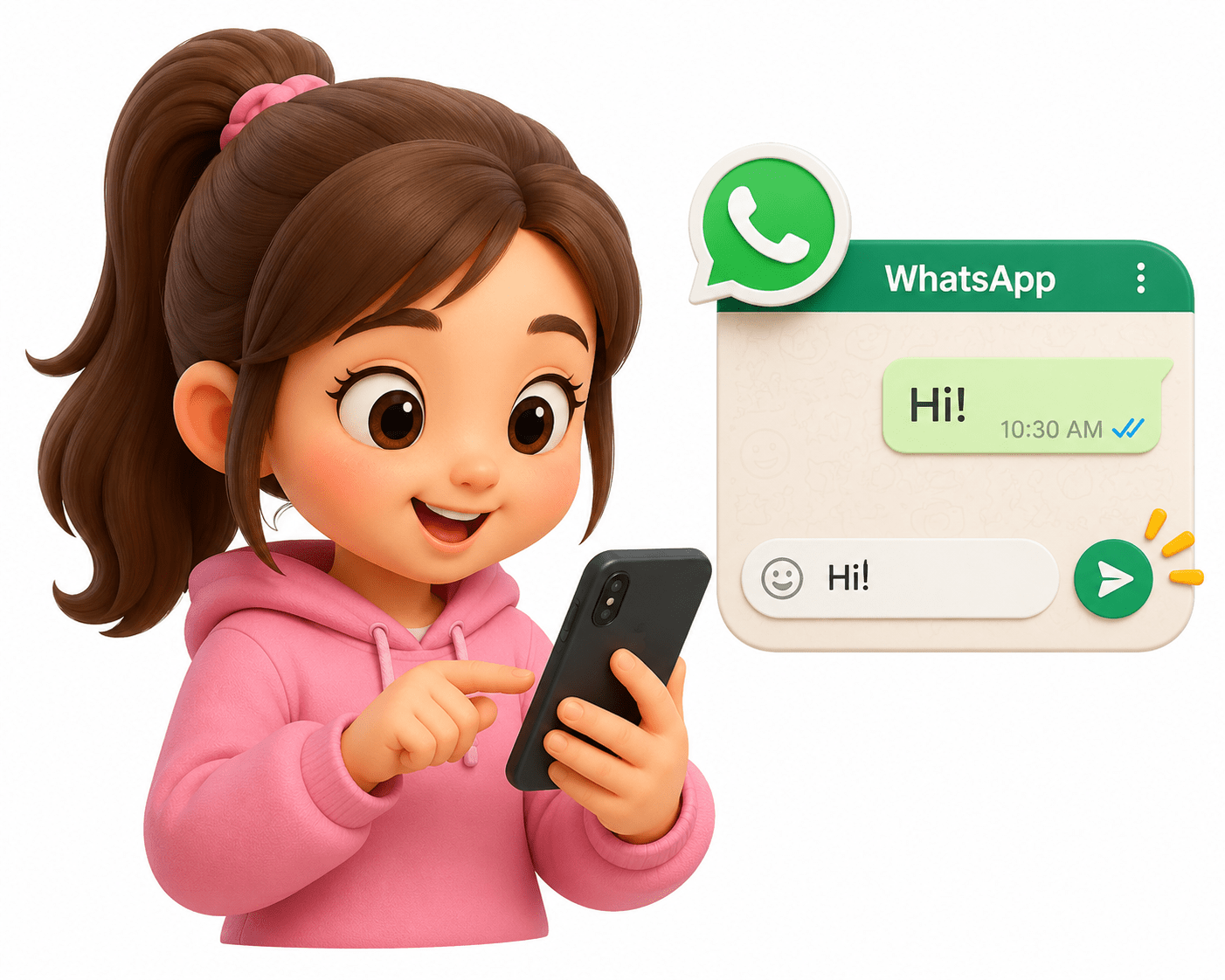
First, you write what you want to send.
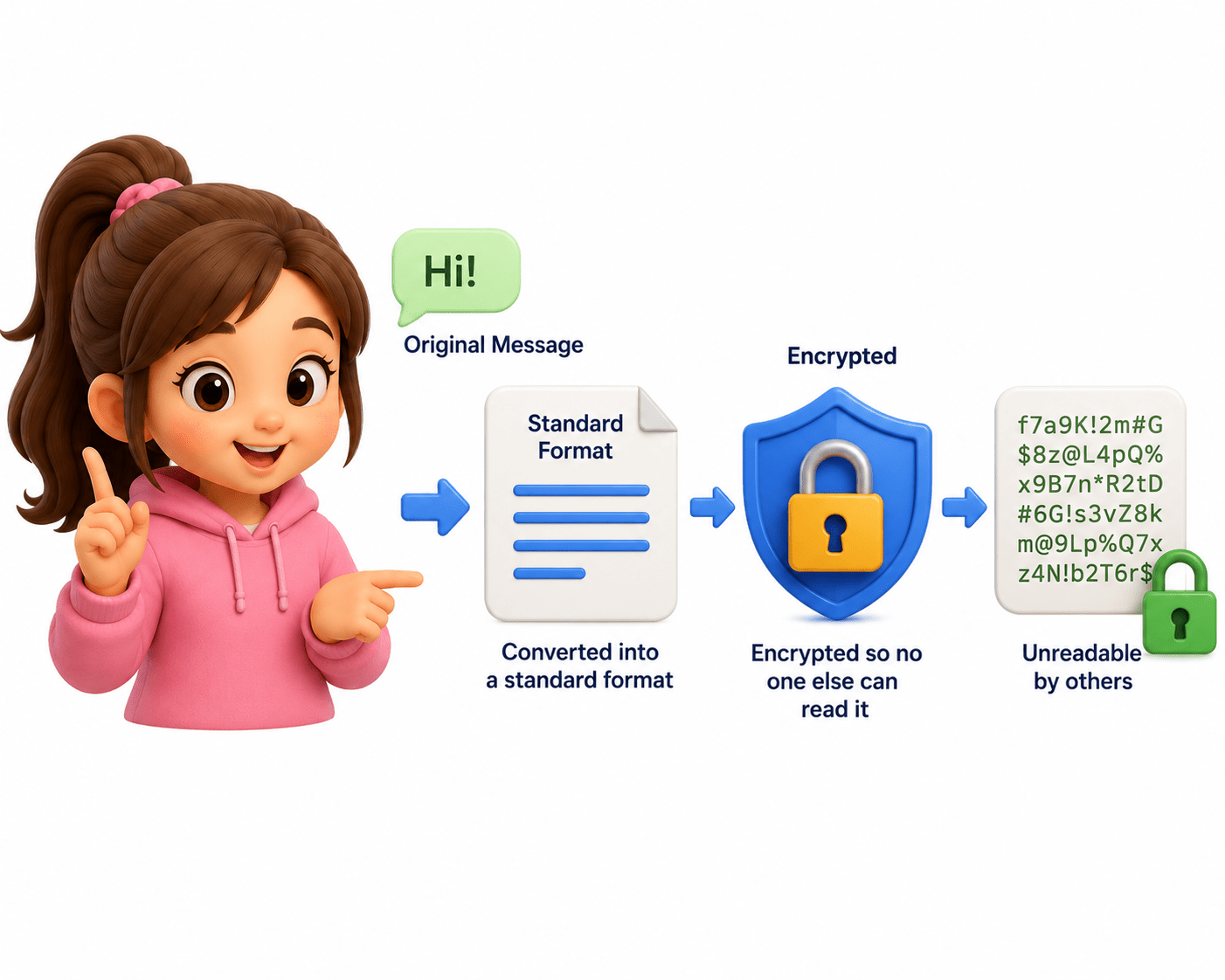
Then the gift is packed safely and labeled correctly.
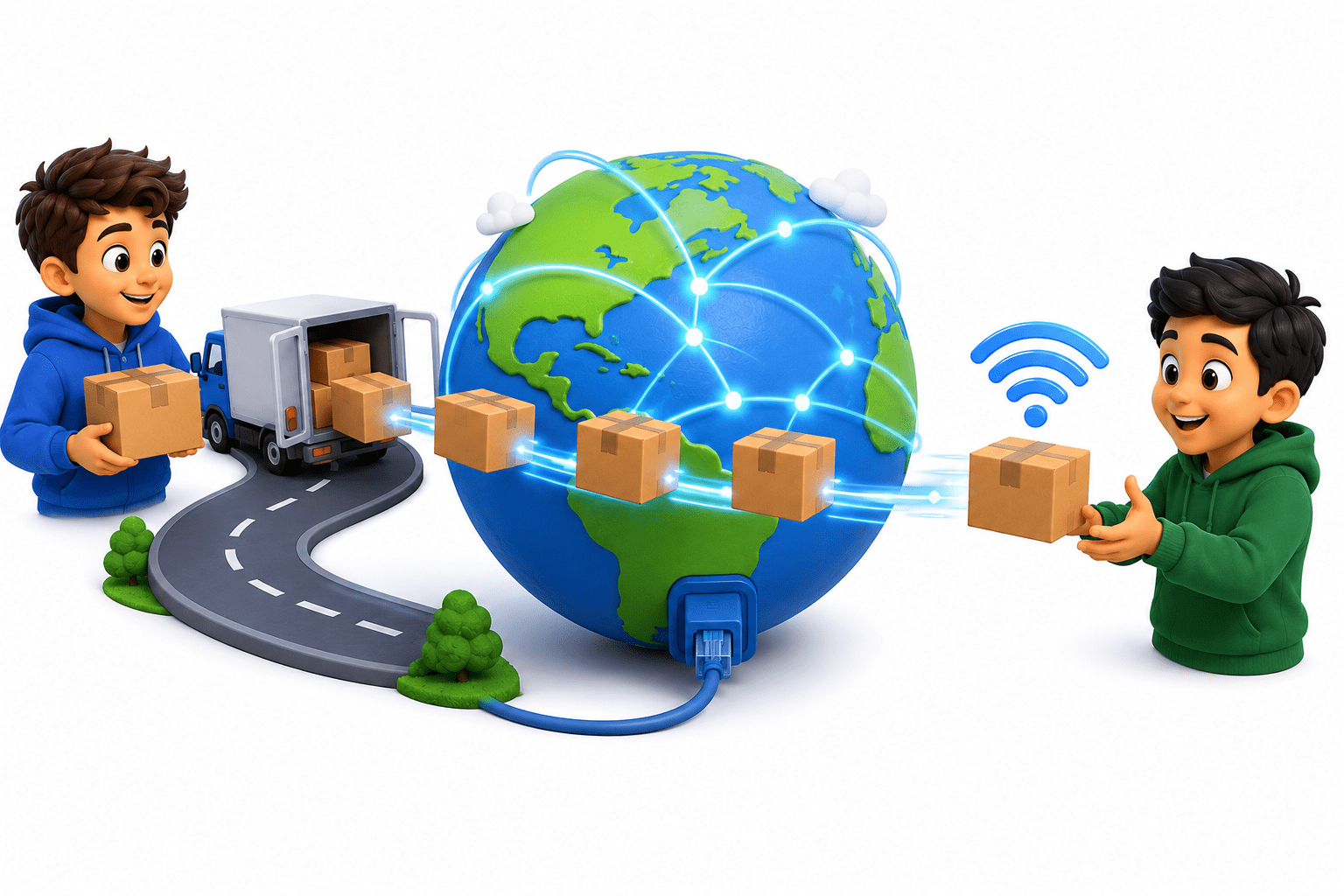
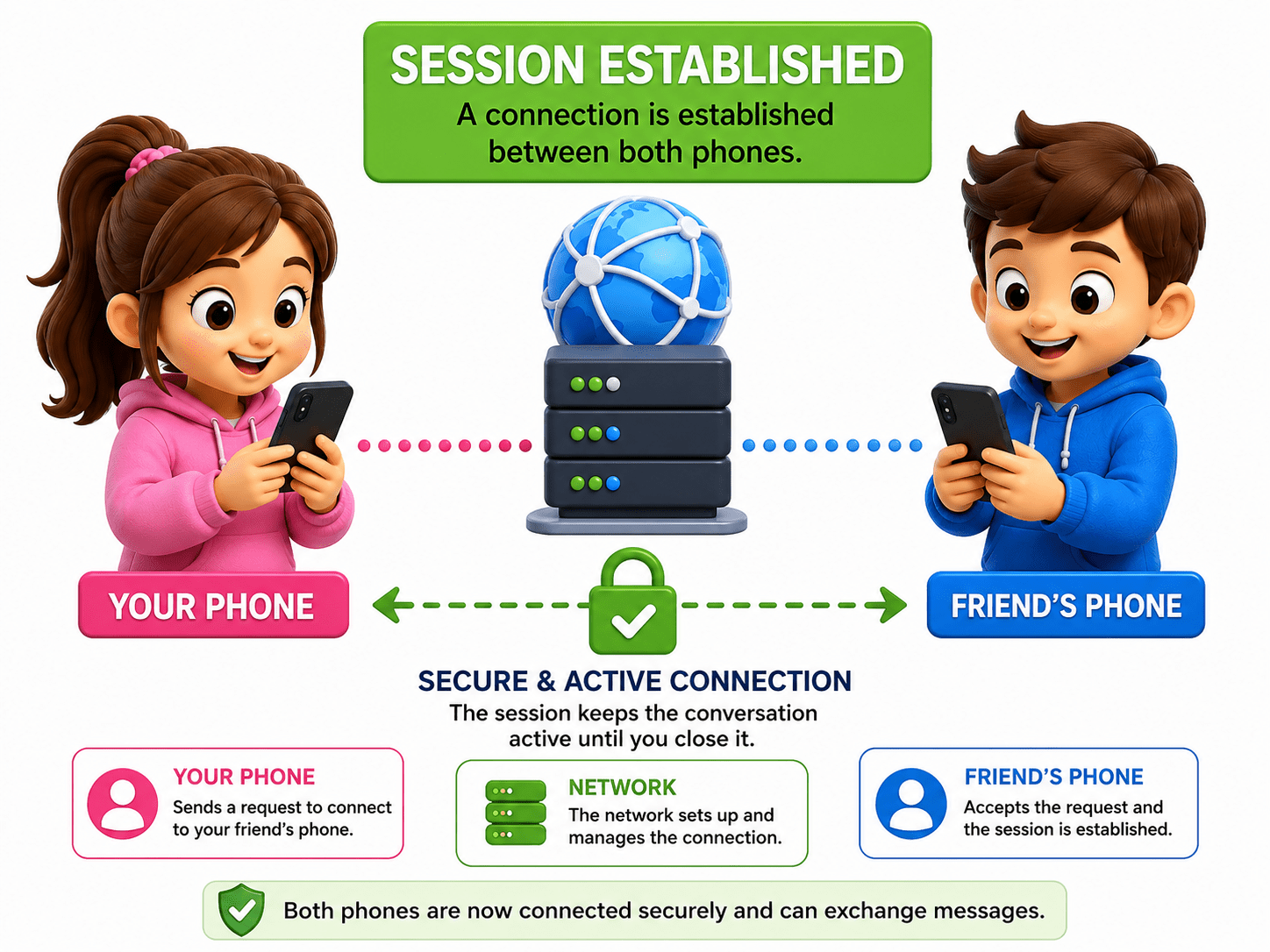
The delivery company manages the connection between you and your friend.
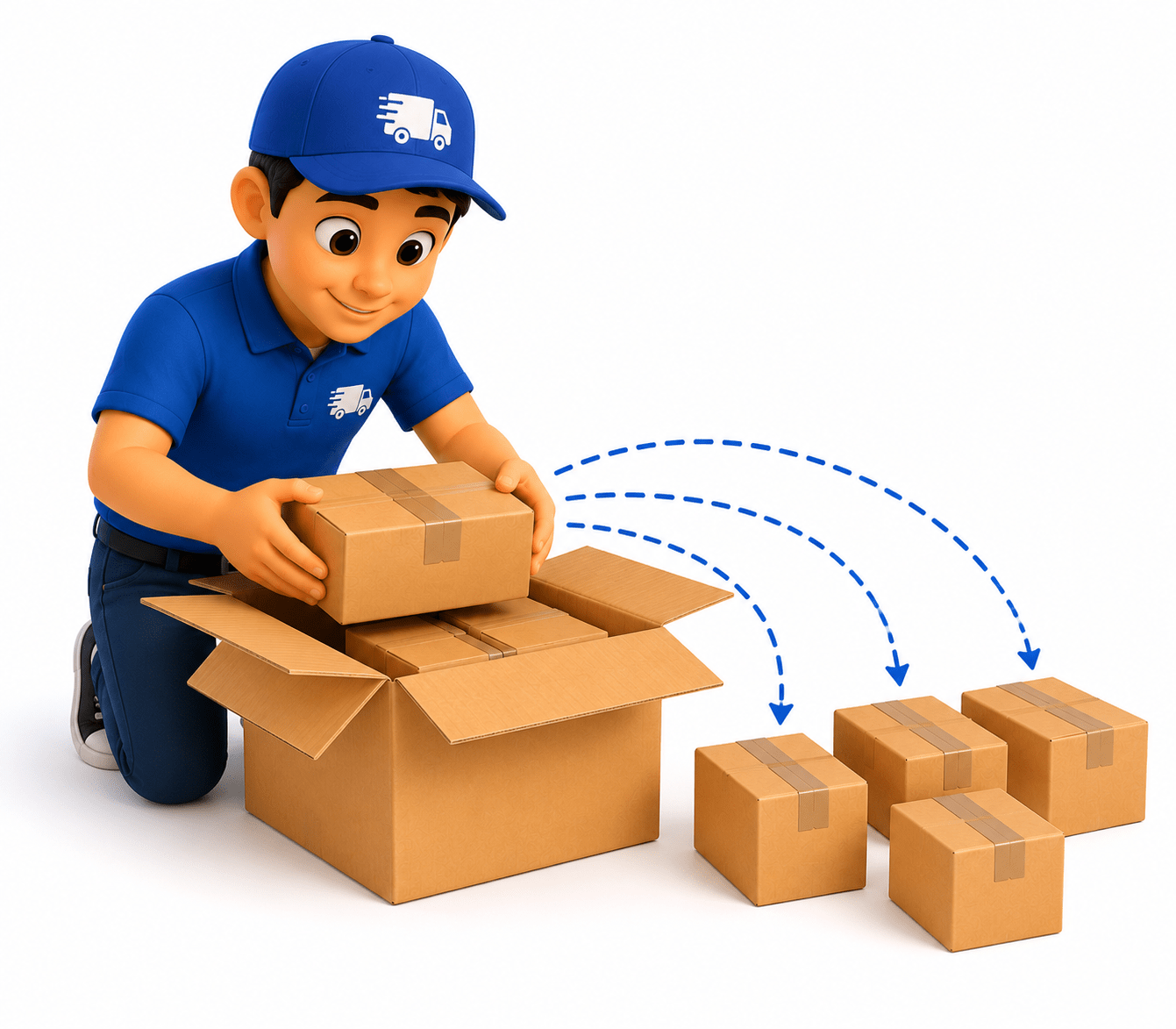
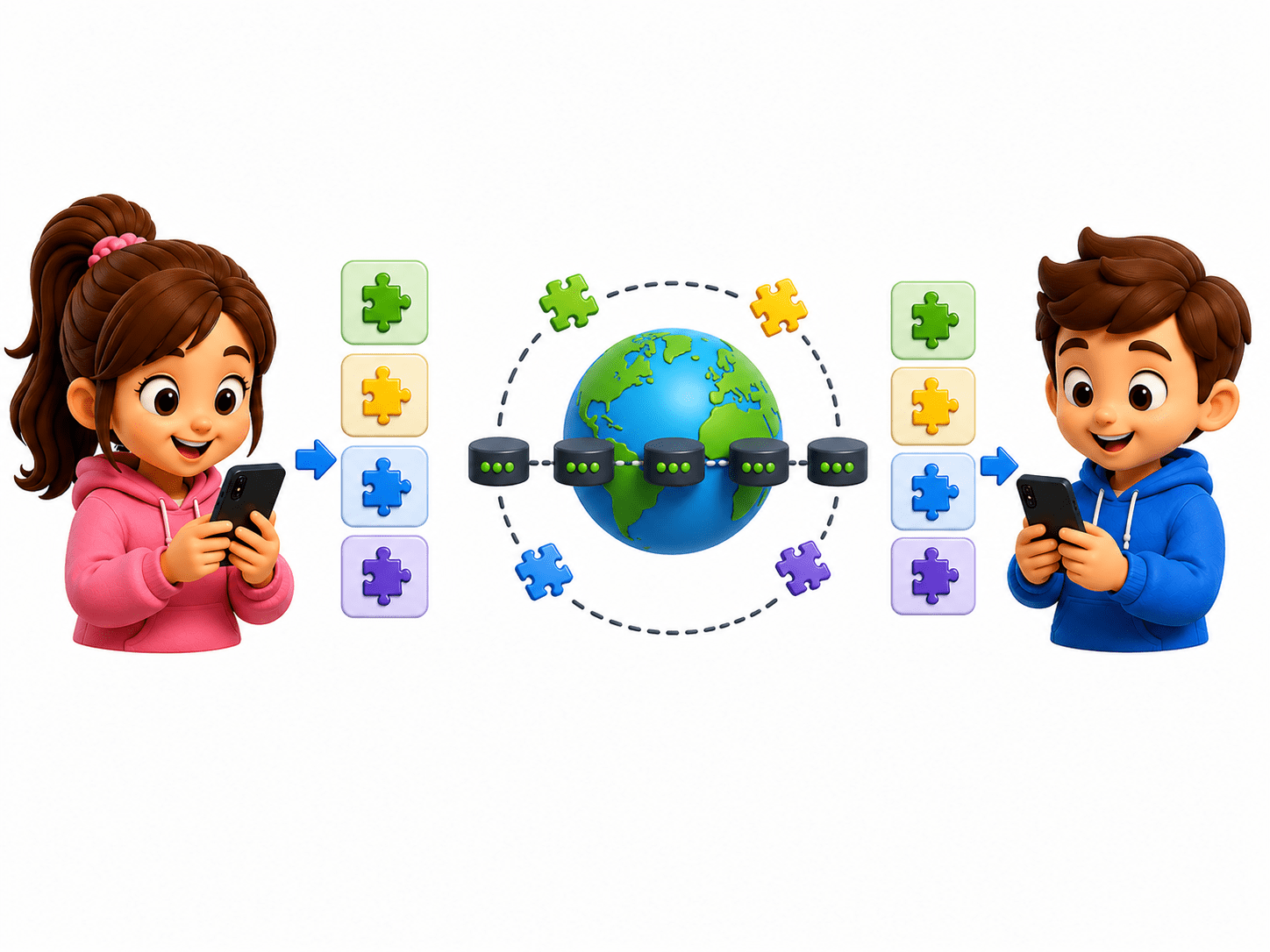
The package is divided into smaller boxes for easy transport.
Each box gets an address so it reaches the right place.
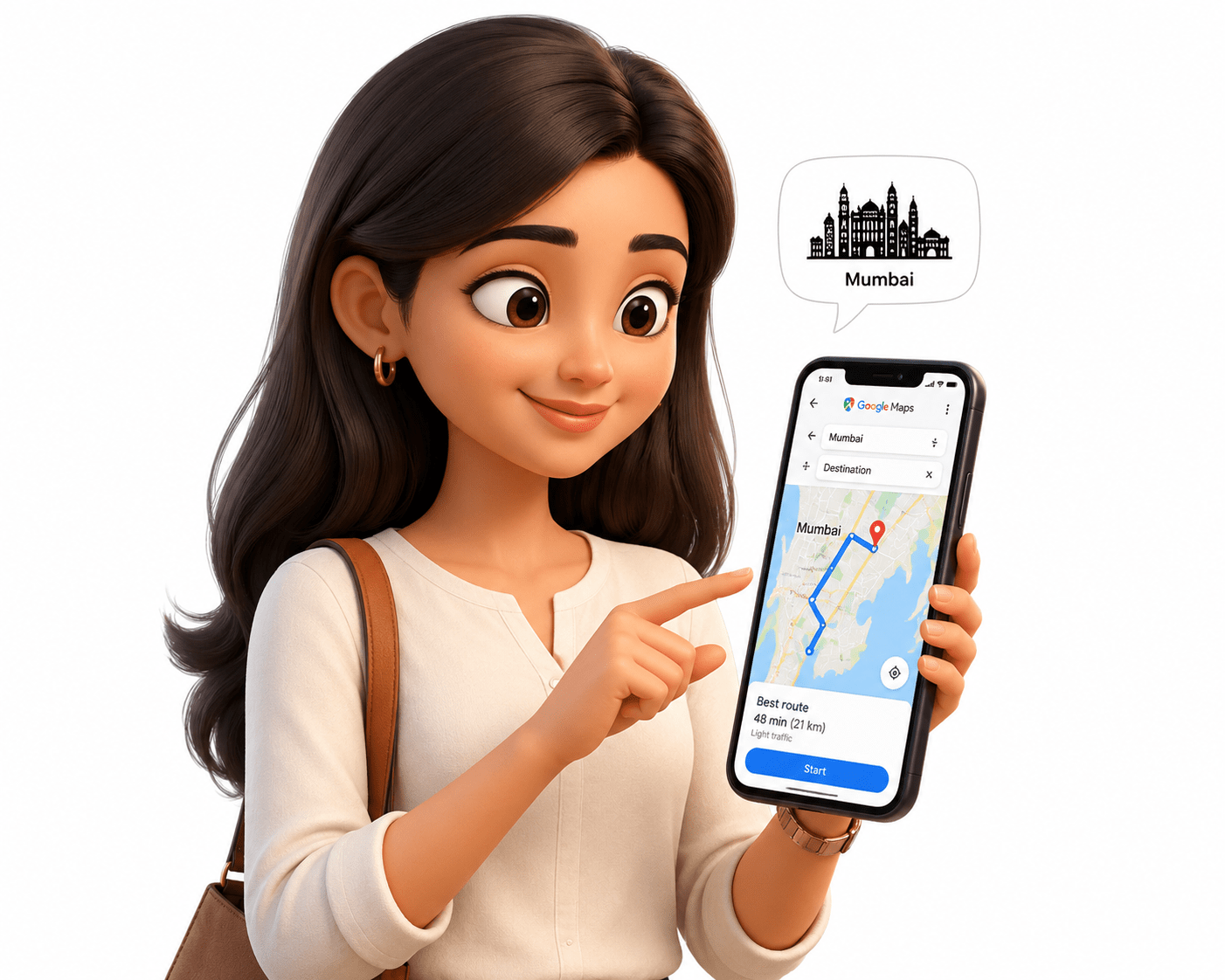
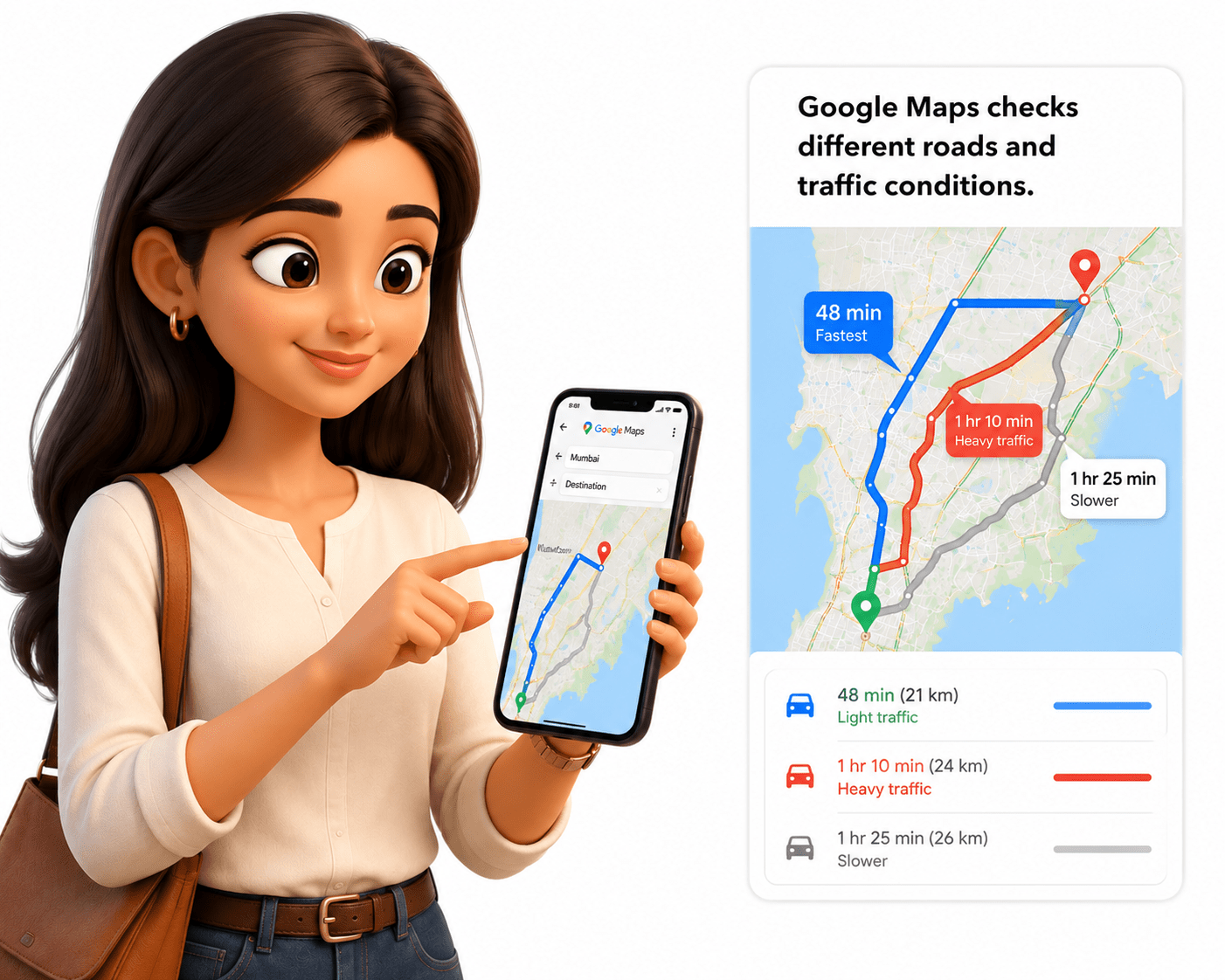
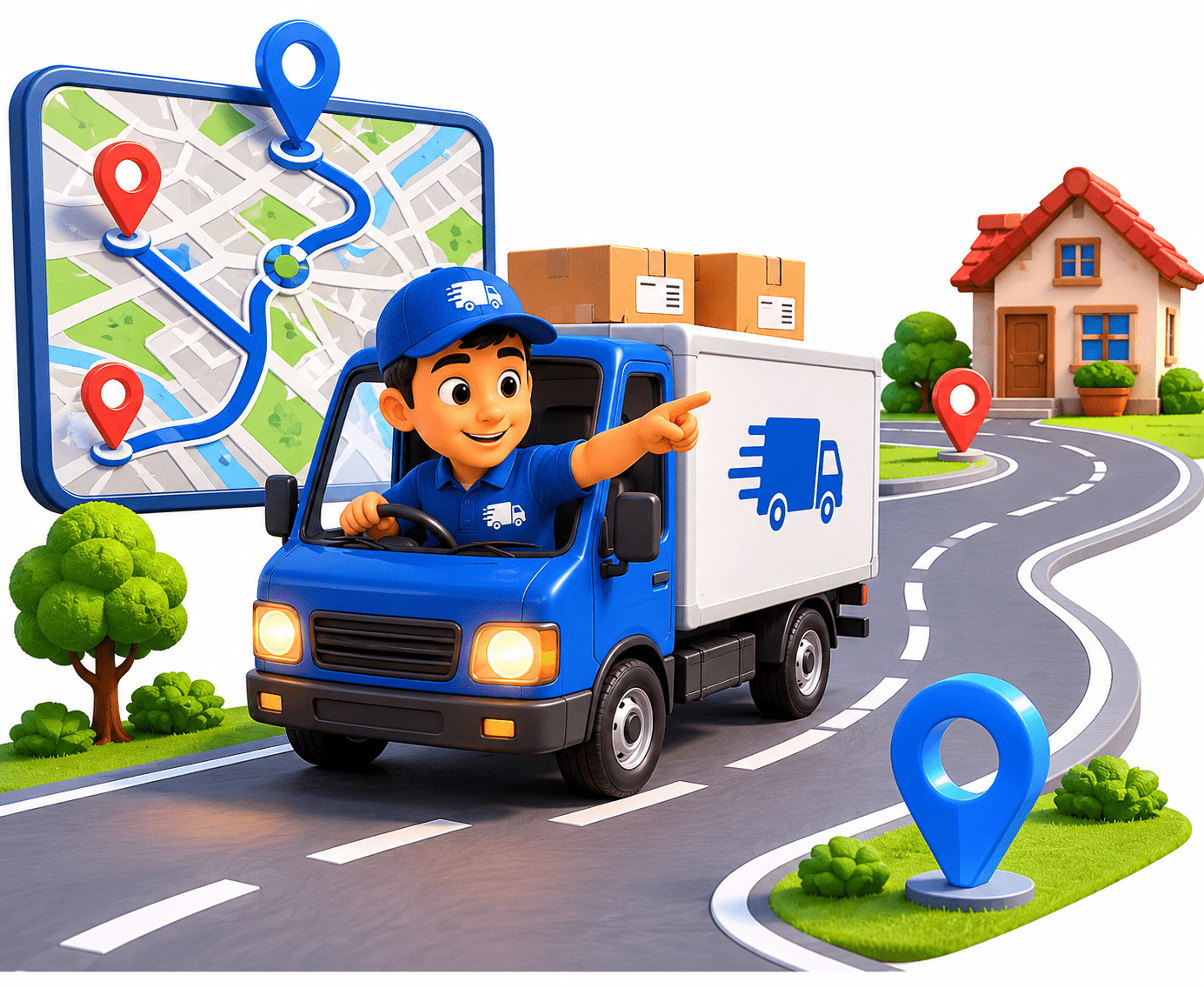
The delivery trucks find the best roads to travel.
Finally, the boxes move through roads, cables, or Wi-Fi signals across the internet.
Helps understand how data moves between devices step by step
Breaks complex networking into smaller, easy-to-manage parts
Makes it easier to identify and fix network problems
Ensures different devices and systems can work together properly
Helps in designing and improving network communication systems
Provides a standard structure for learning and understanding networking
Use of OSI Model
Introduction to OSI Model
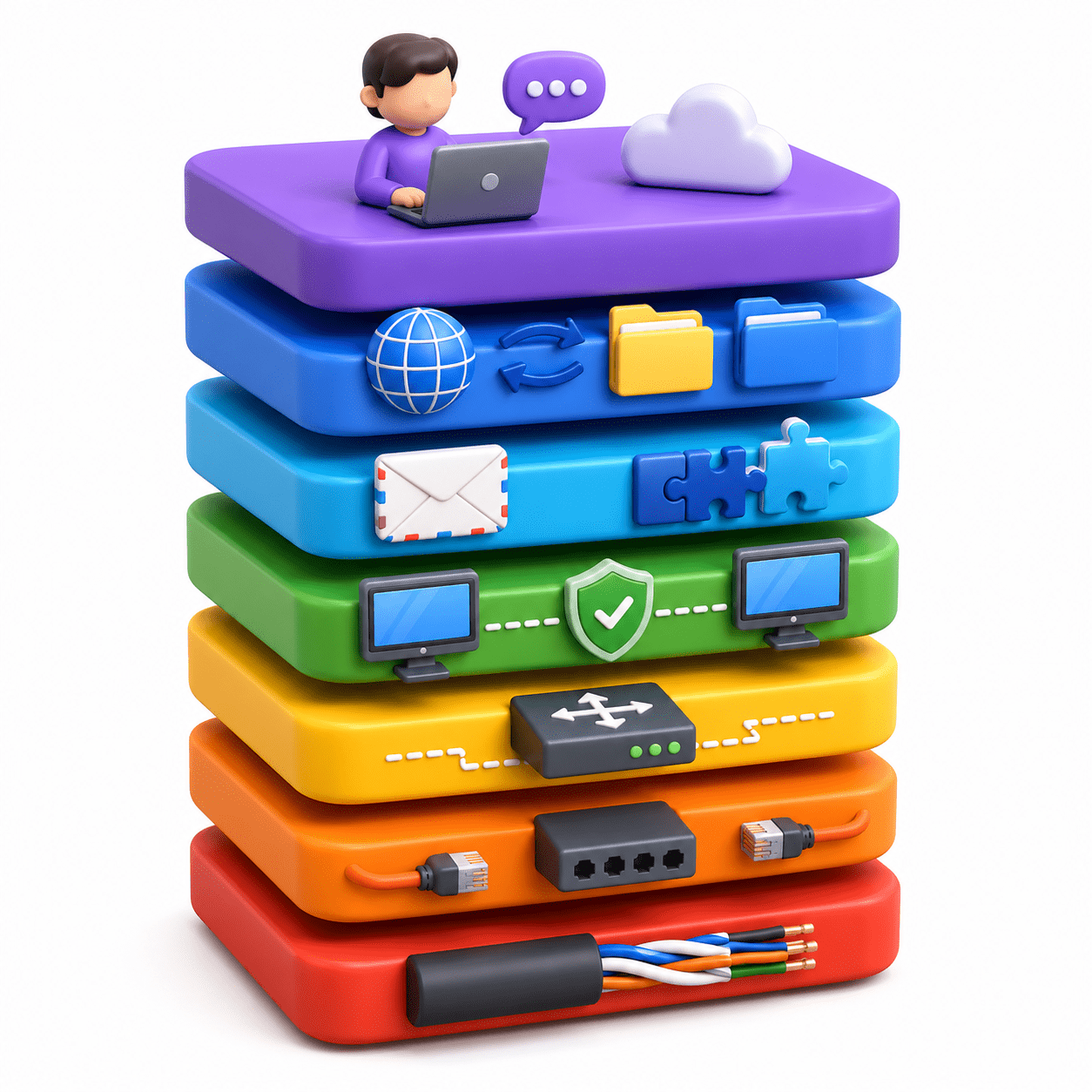
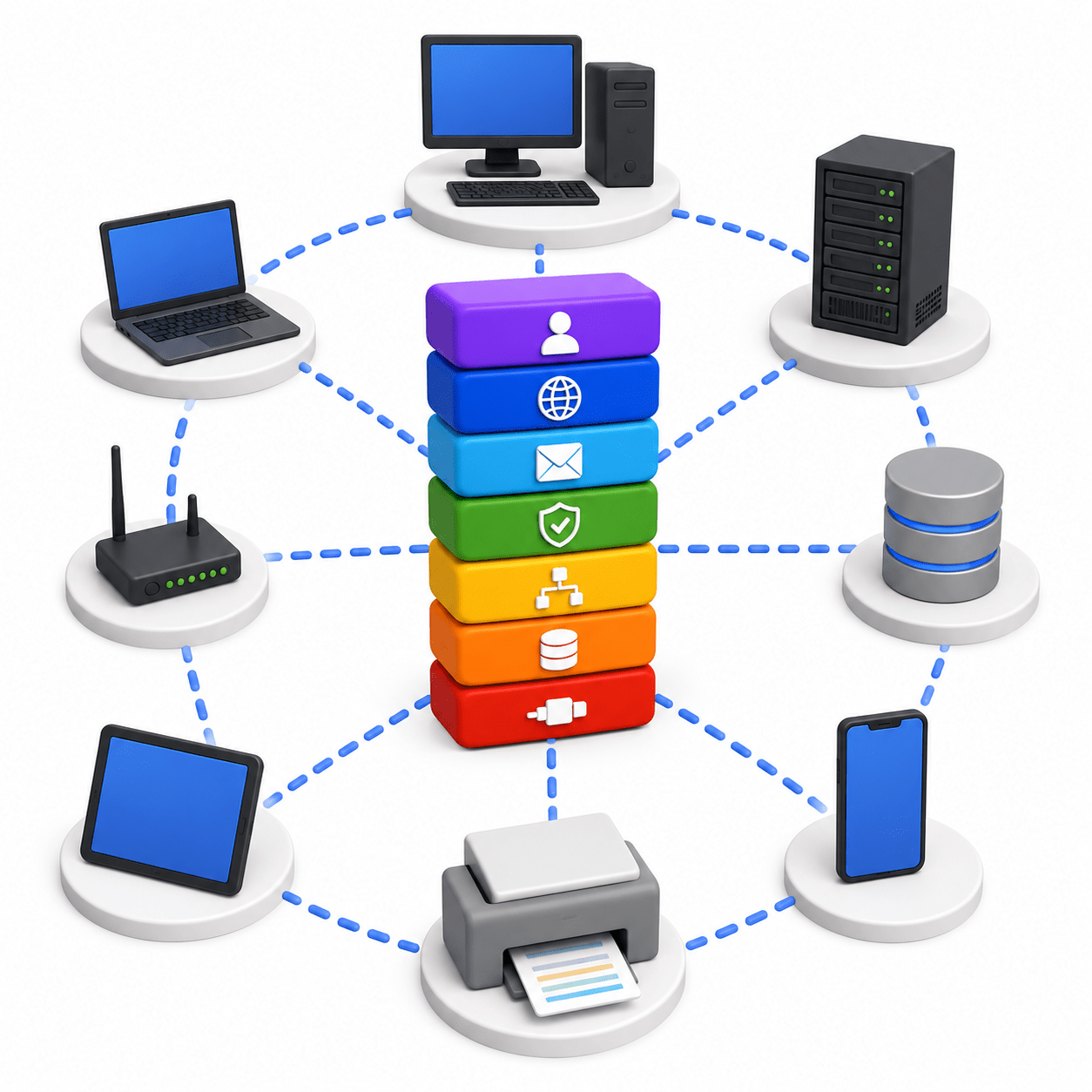
The Open Systems Interconnection (OSI) model is a conceptual 7-layer framework developed by the ISO in 1984 to standardize computer networking functions, enabling diverse systems to communicate. It divides data communication into layers (physical to application) for troubleshooting and understanding network protocols.
Purpose of Layered Architecture
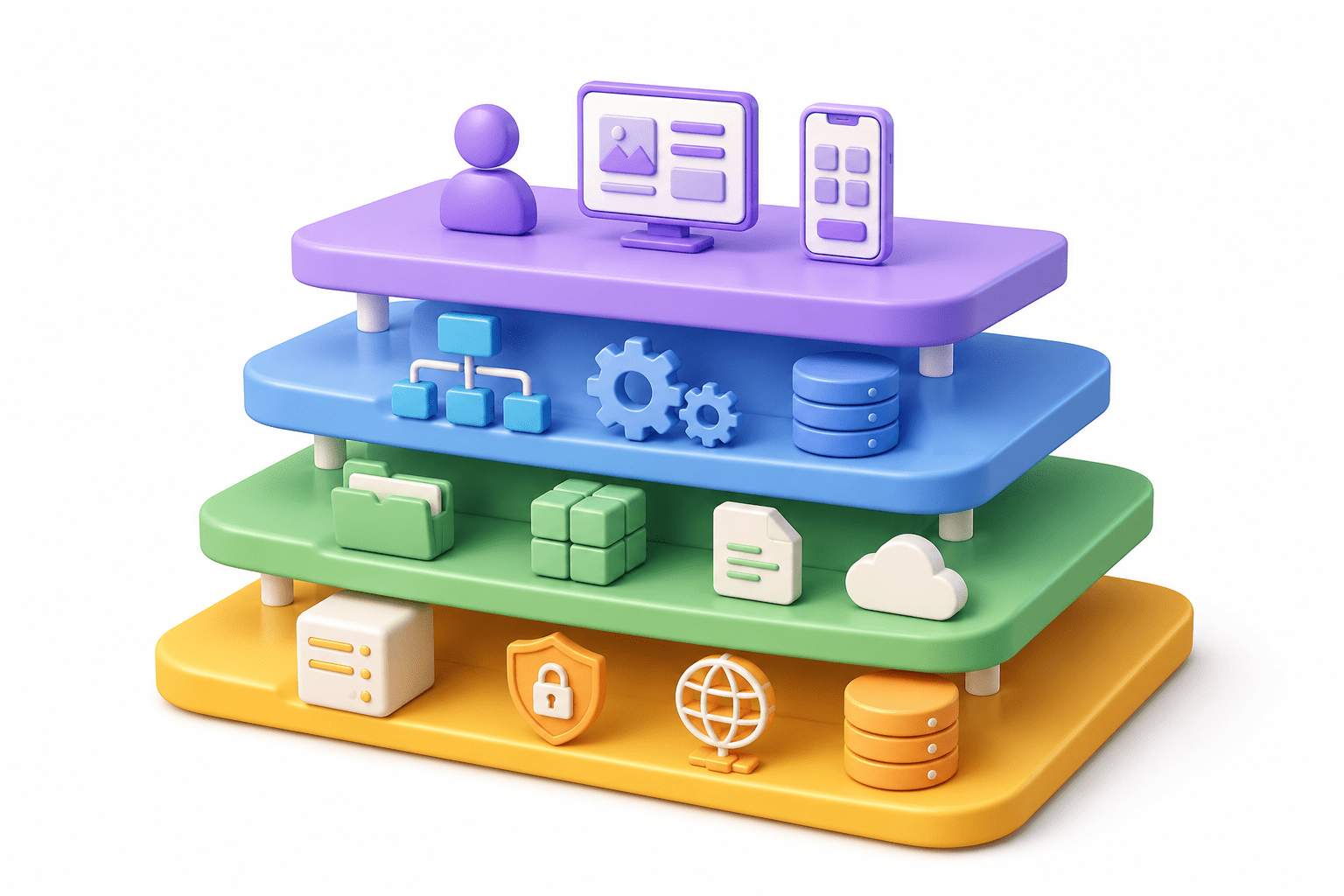
Layered architecture divides networking into smaller parts to make it easy to design, understand, and troubleshoot.
Why this is done?
Separation of work (Specific job for each layer)
Each layer handles only one function.
Example: One layer handles routing, another handles encryption.
This makes the system organized and efficient.
Easy to learn and understand
Breaking networking into layers helps students and engineers understand the process step-by-step instead of all at once.
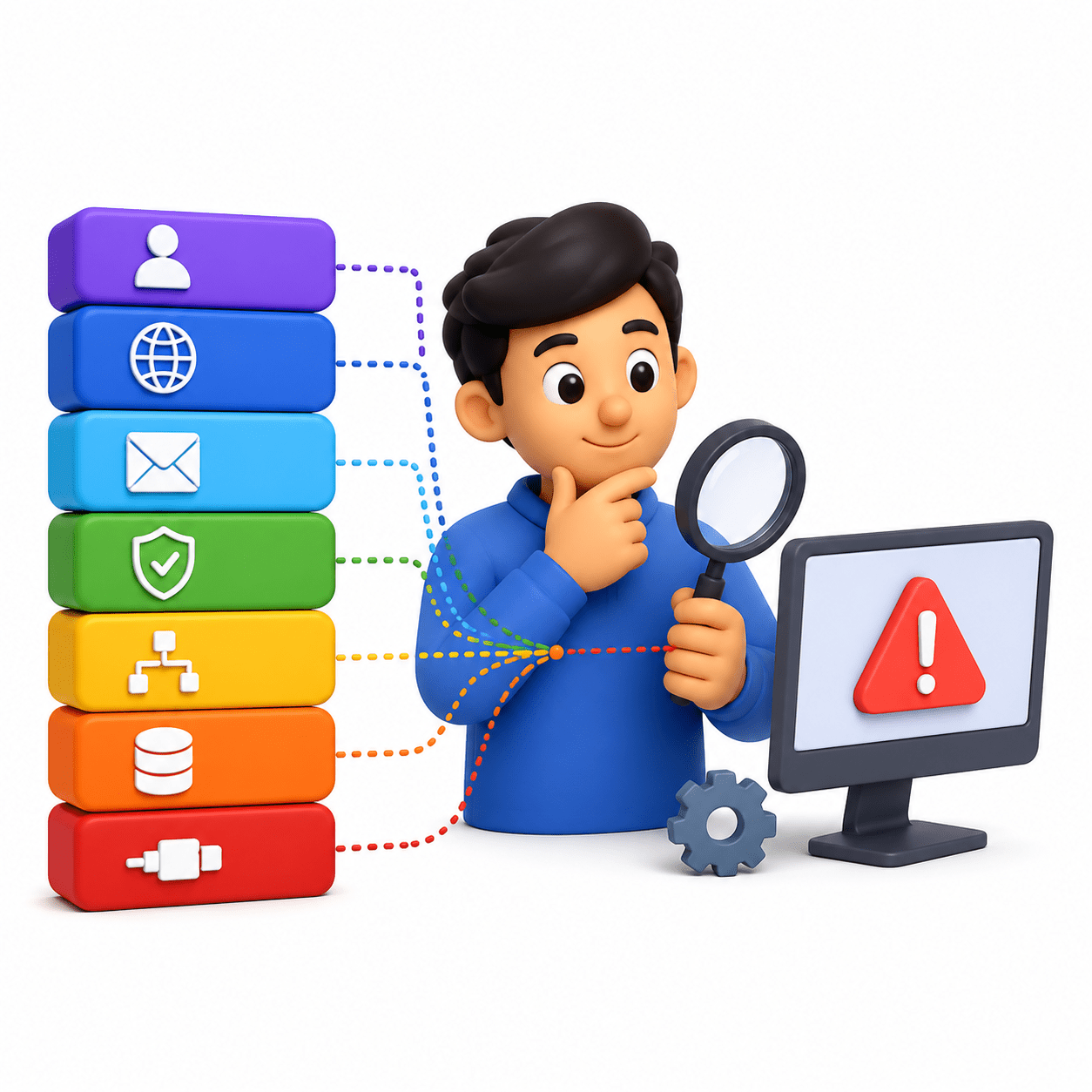
Simplifies troubleshooting (Error detection)
If something goes wrong, we can identify the exact layer causing the issue.
Example:
No signal → Physical Layer problem
Wrong IP → Network Layer issue
Flexibility and independence
Changes in one layer do not affect other layers.
Example: You can upgrade hardware (Physical layer) without changing software.
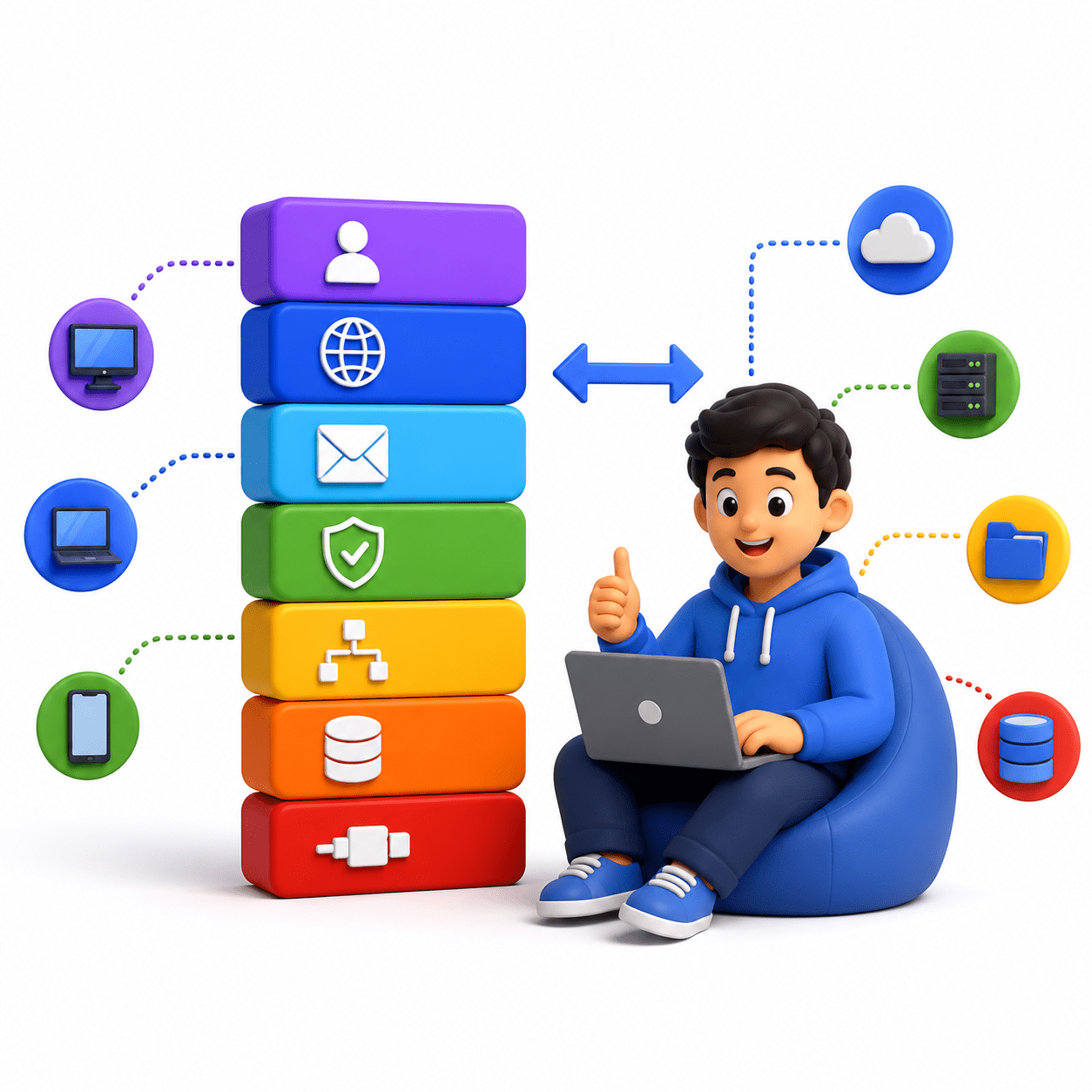
Interoperability (Different systems can work together)
Devices from different companies can communicate because they follow the same layered structure.
Reusability of protocols
Same protocols (like TCP/IP) can be used in different applications without redesigning everything.
7 Layers Overview
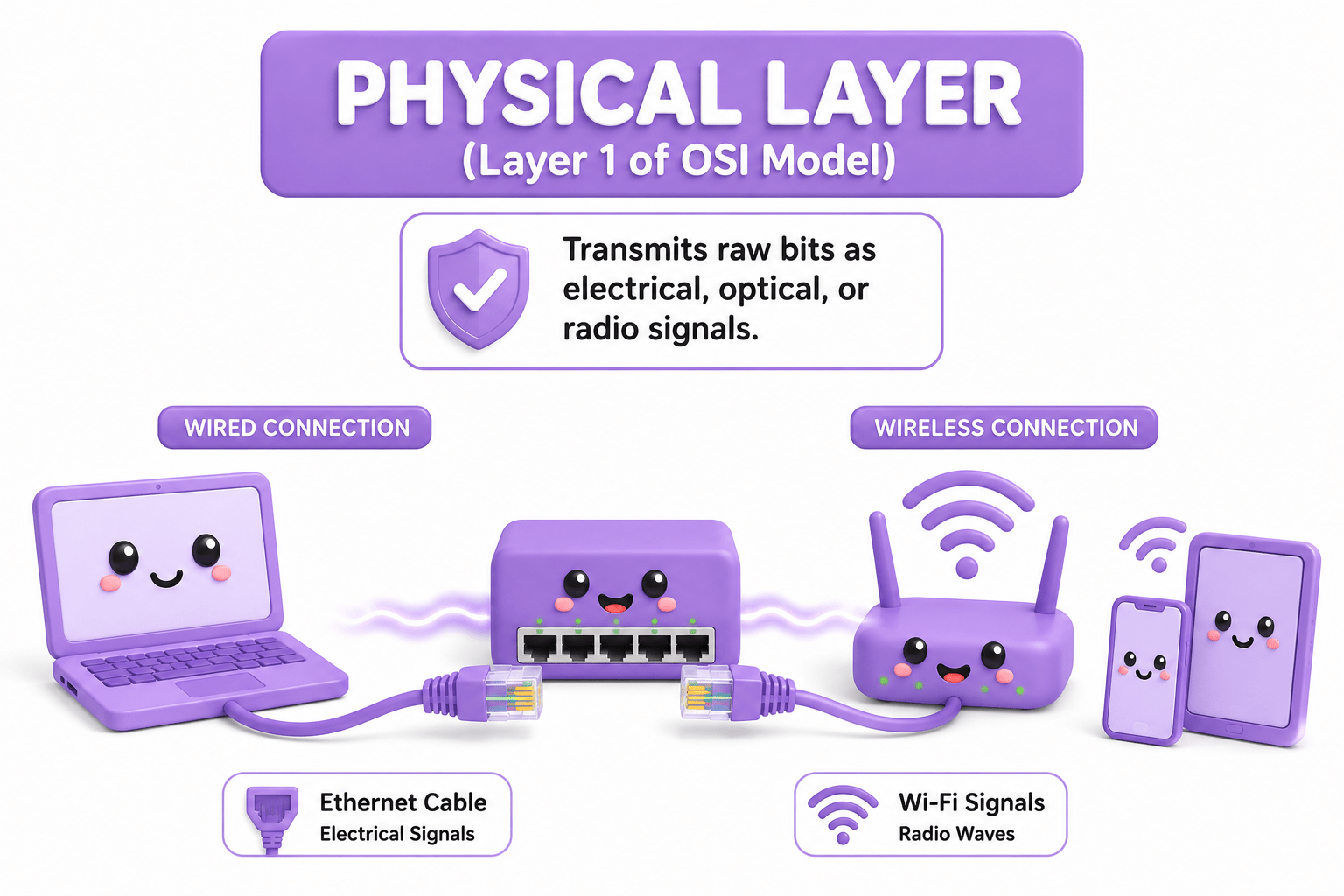
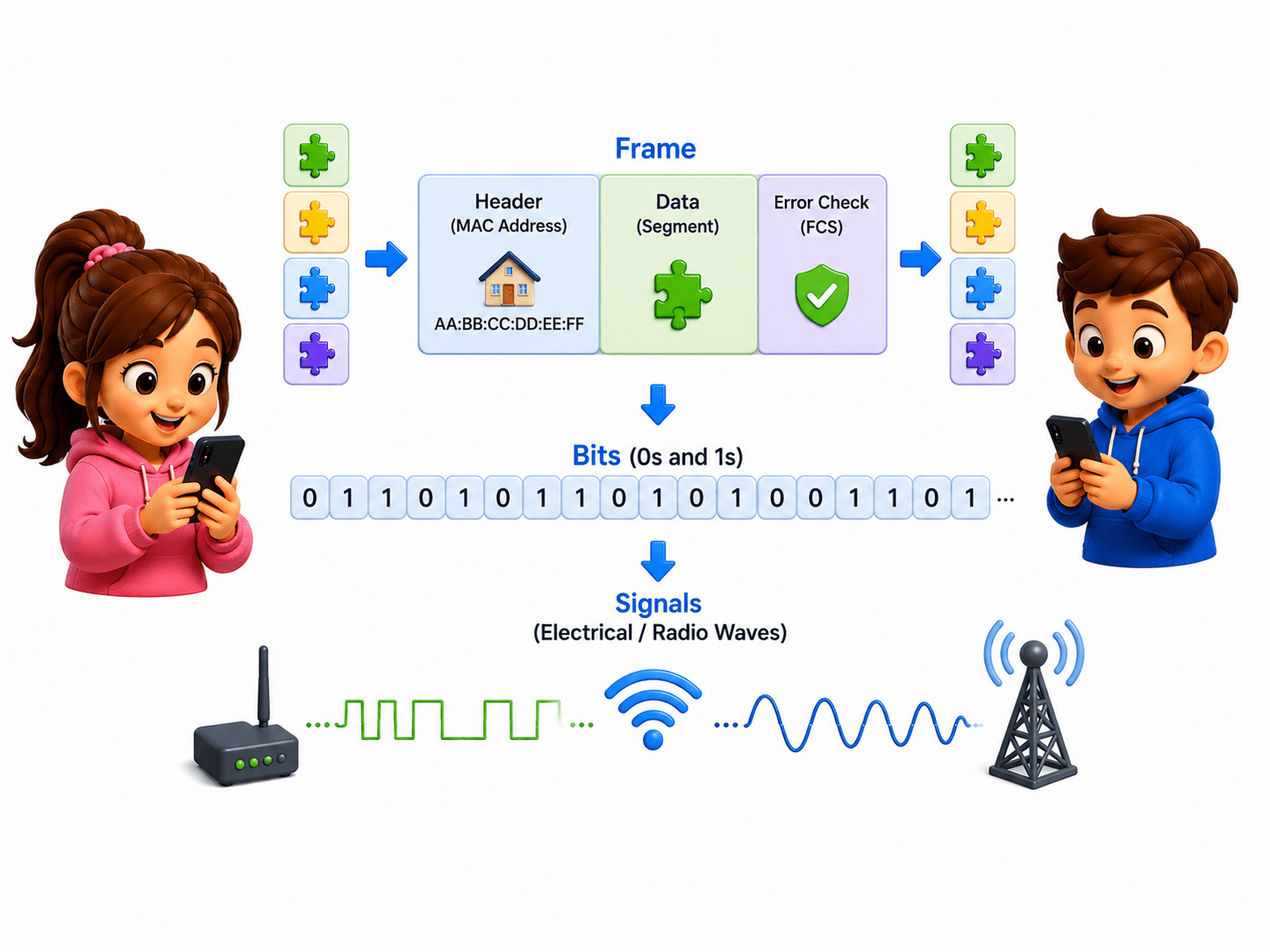
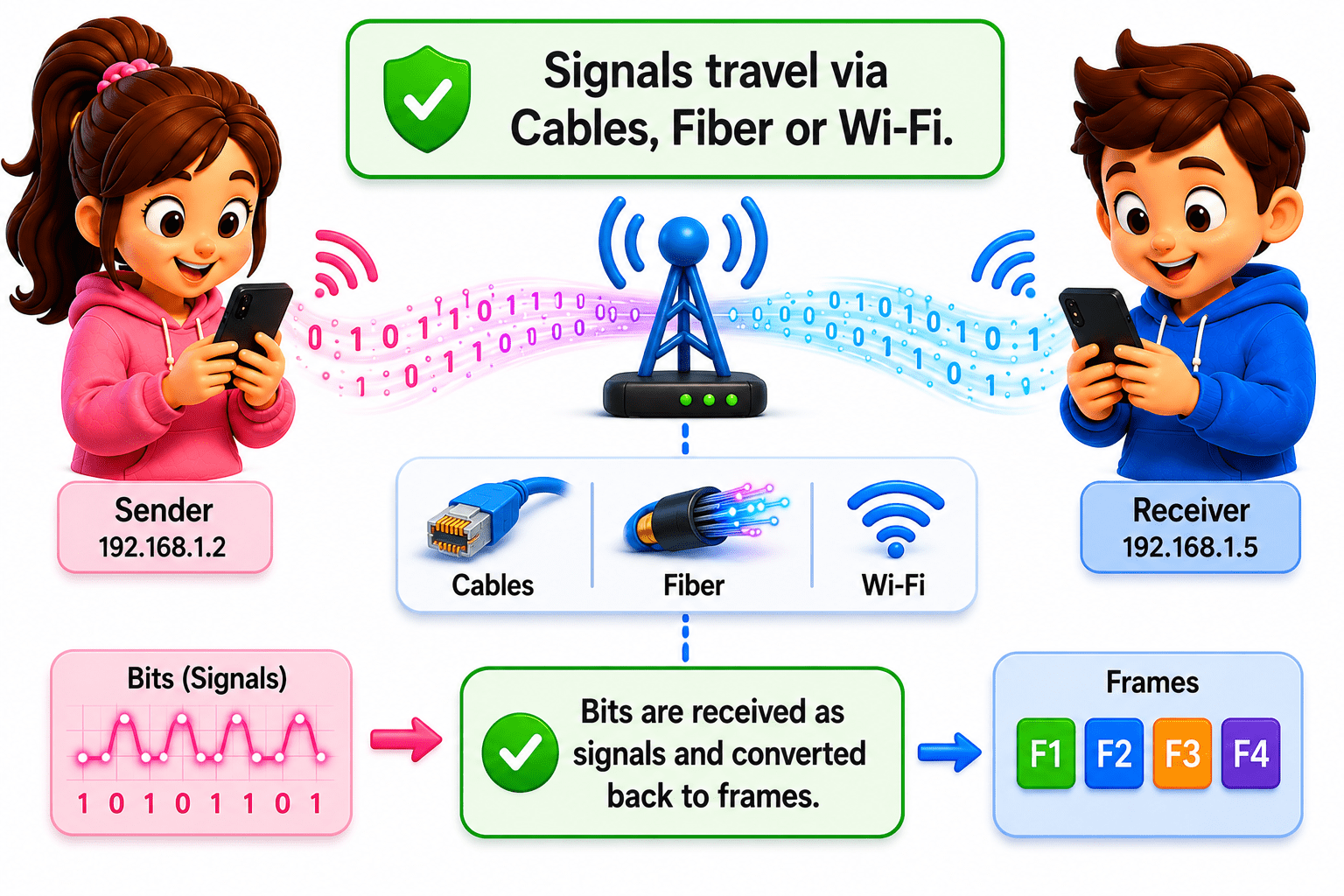
Transmits raw bitstreams over physical mediums (cables, switches). Responsible for the transmission and reception of raw bit streams over a physical medium, including electrical, optical, or radio signals.
Deals with cables, signals, hardware
Sends raw bits (0s and 1s)
Example: Ethernet cable, Wi-Fi signals
Physical Layer (Layer 1):
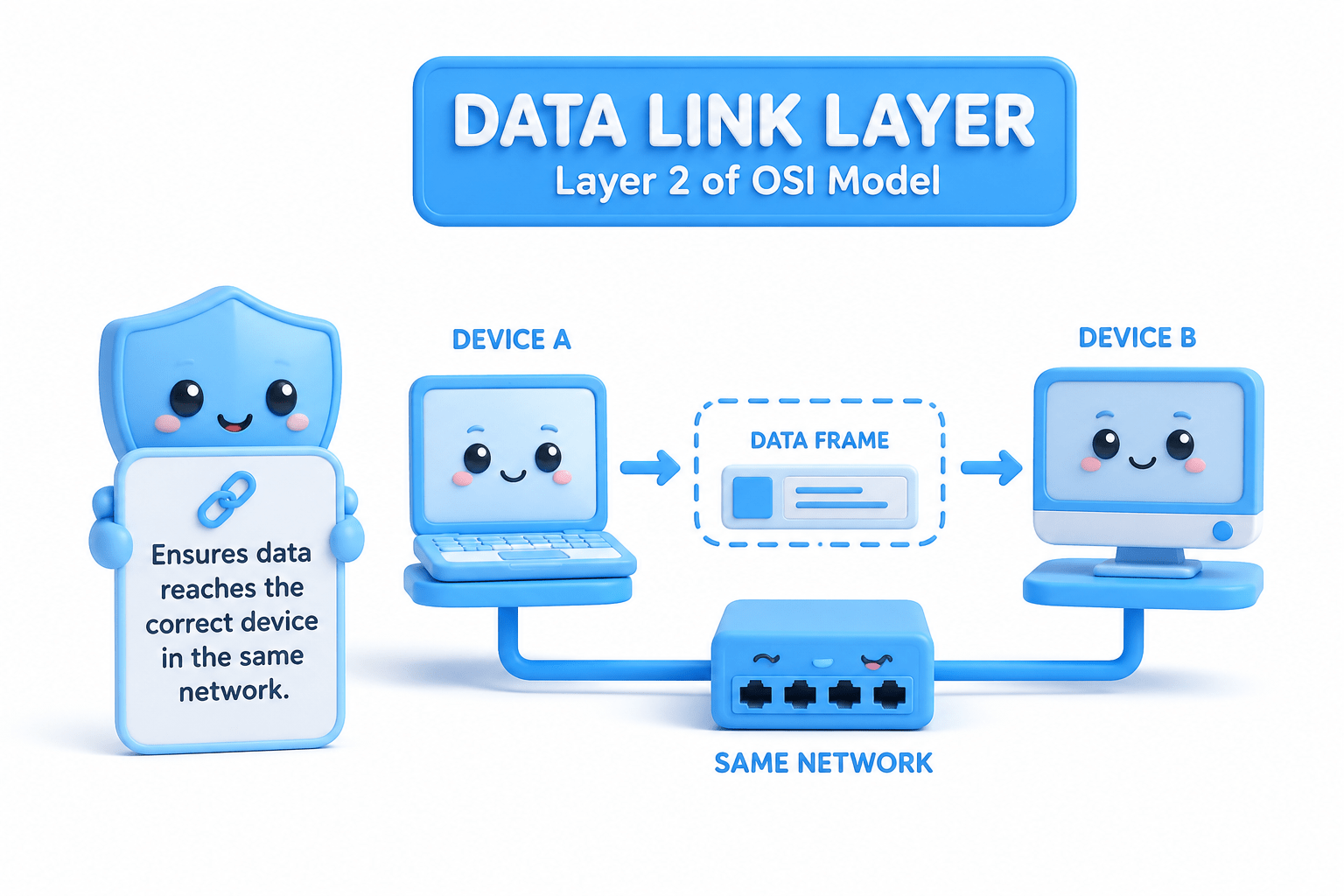
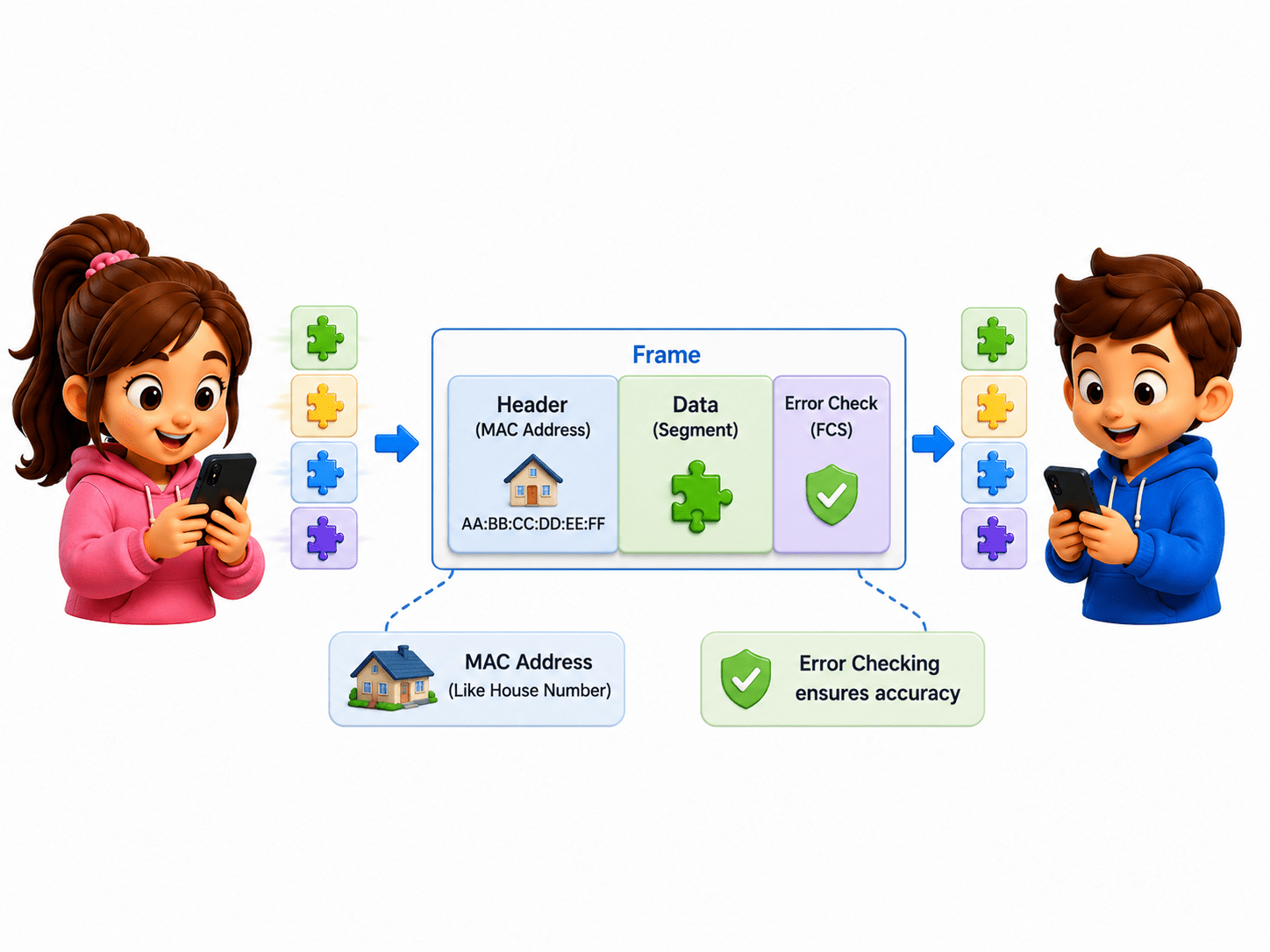
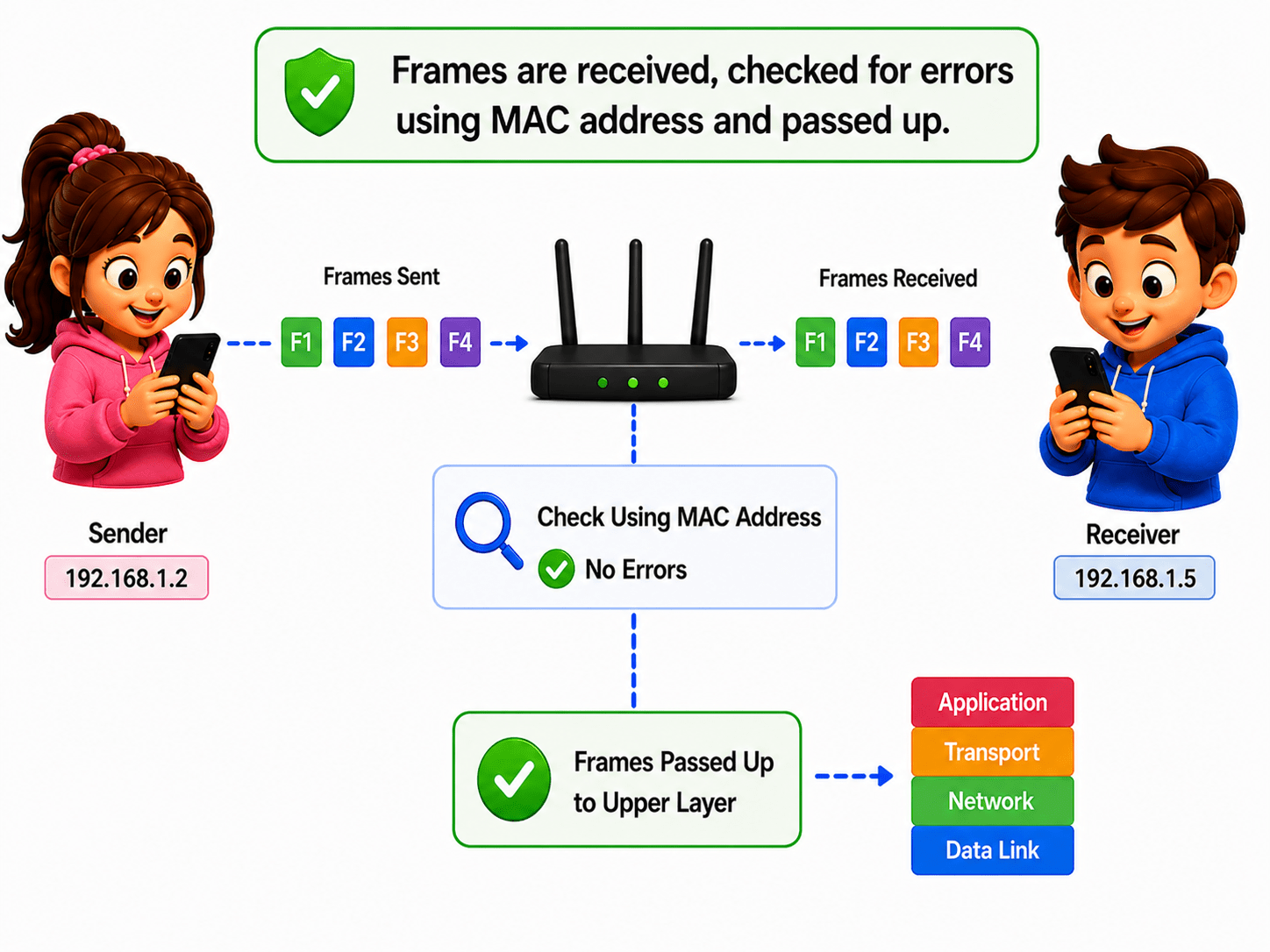
The Data Link Layer makes sure data moves correctly between devices on the same network using their physical (MAC) addresses. It checks for errors and ensures the data reaches the right device nearby.
Uses MAC address
Handles switching & error detection
Example: Ensures data reaches the correct device in the same network
Data Link Layer (Layer 2):
Network Layer (Layer 3):
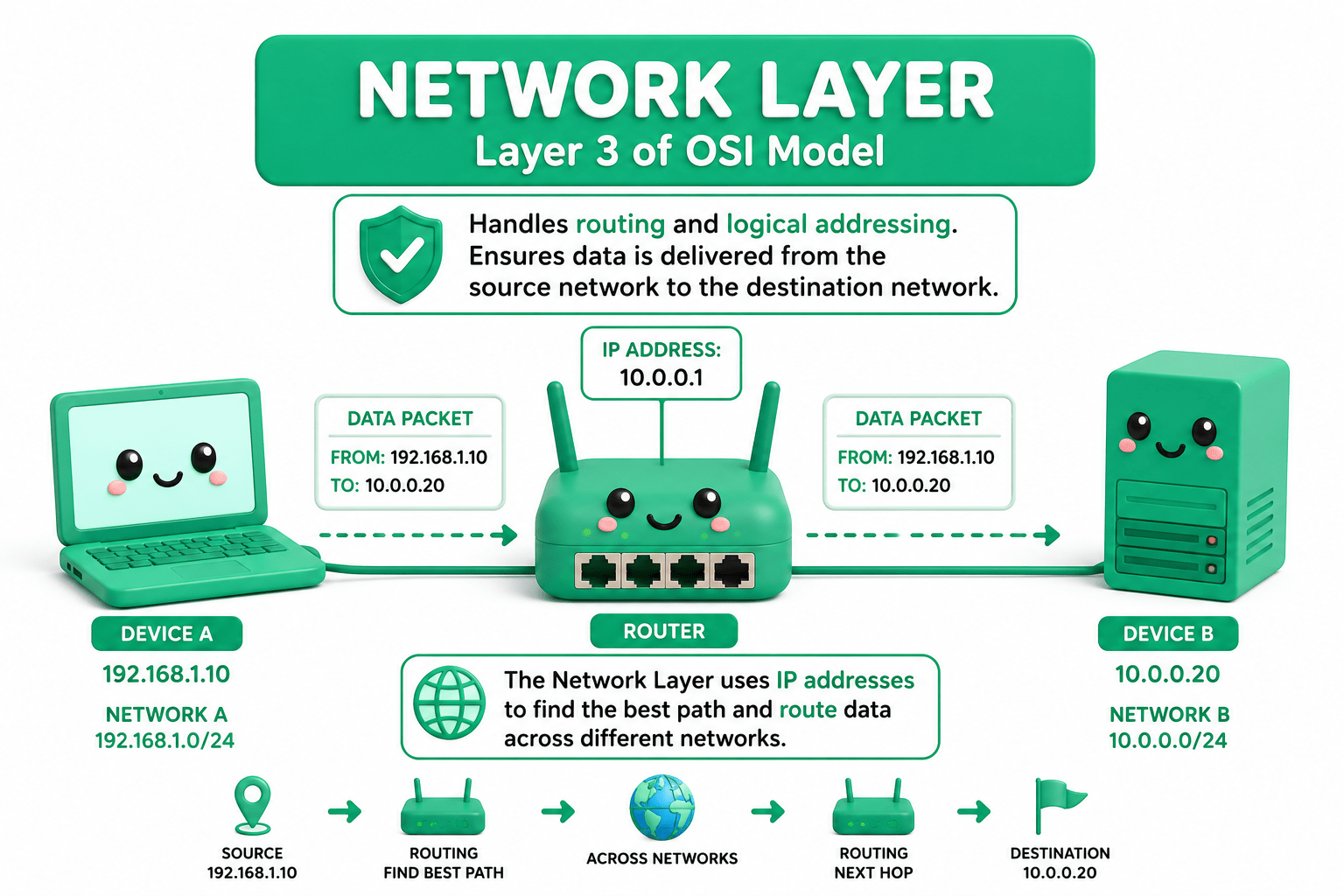
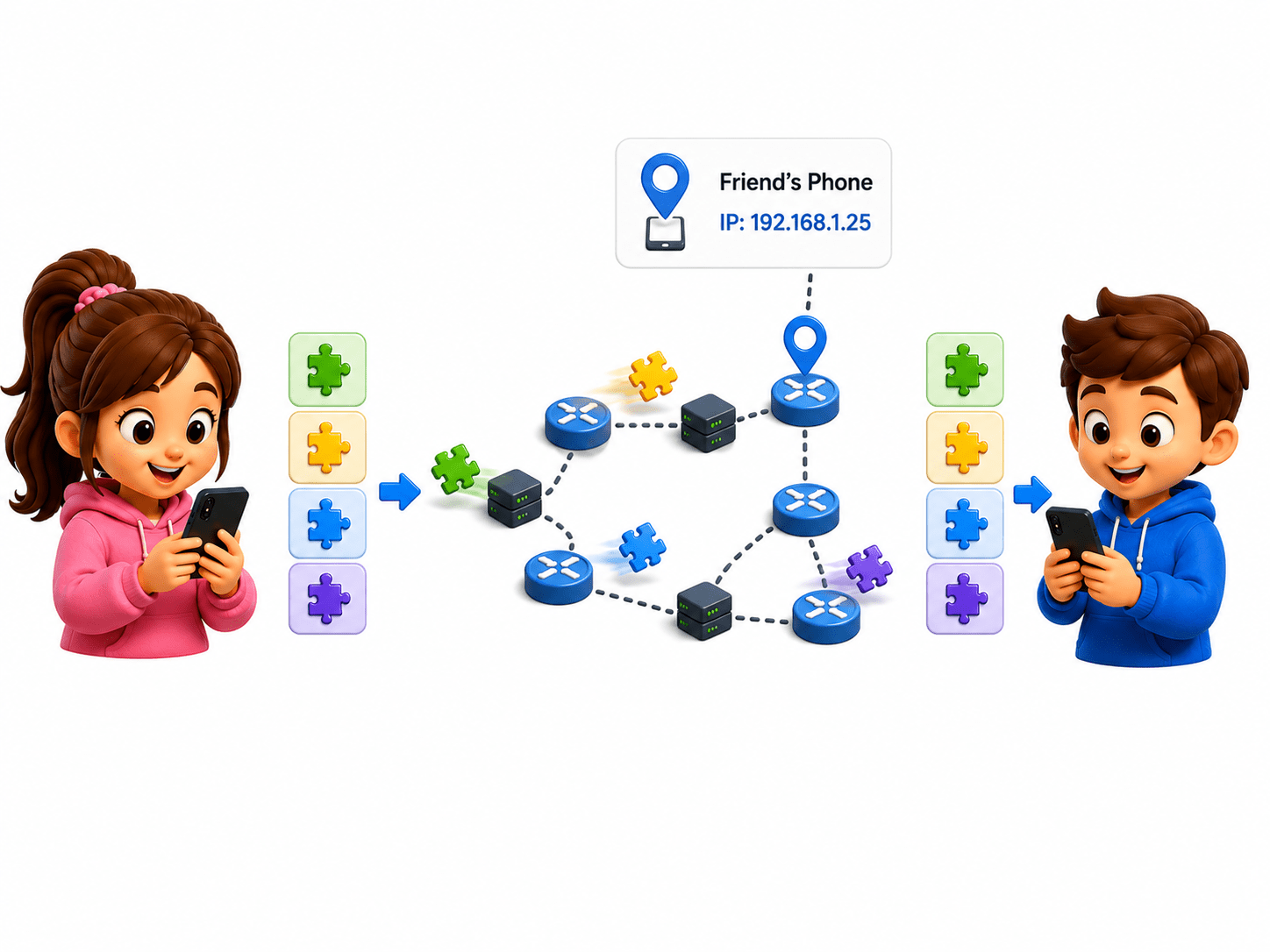
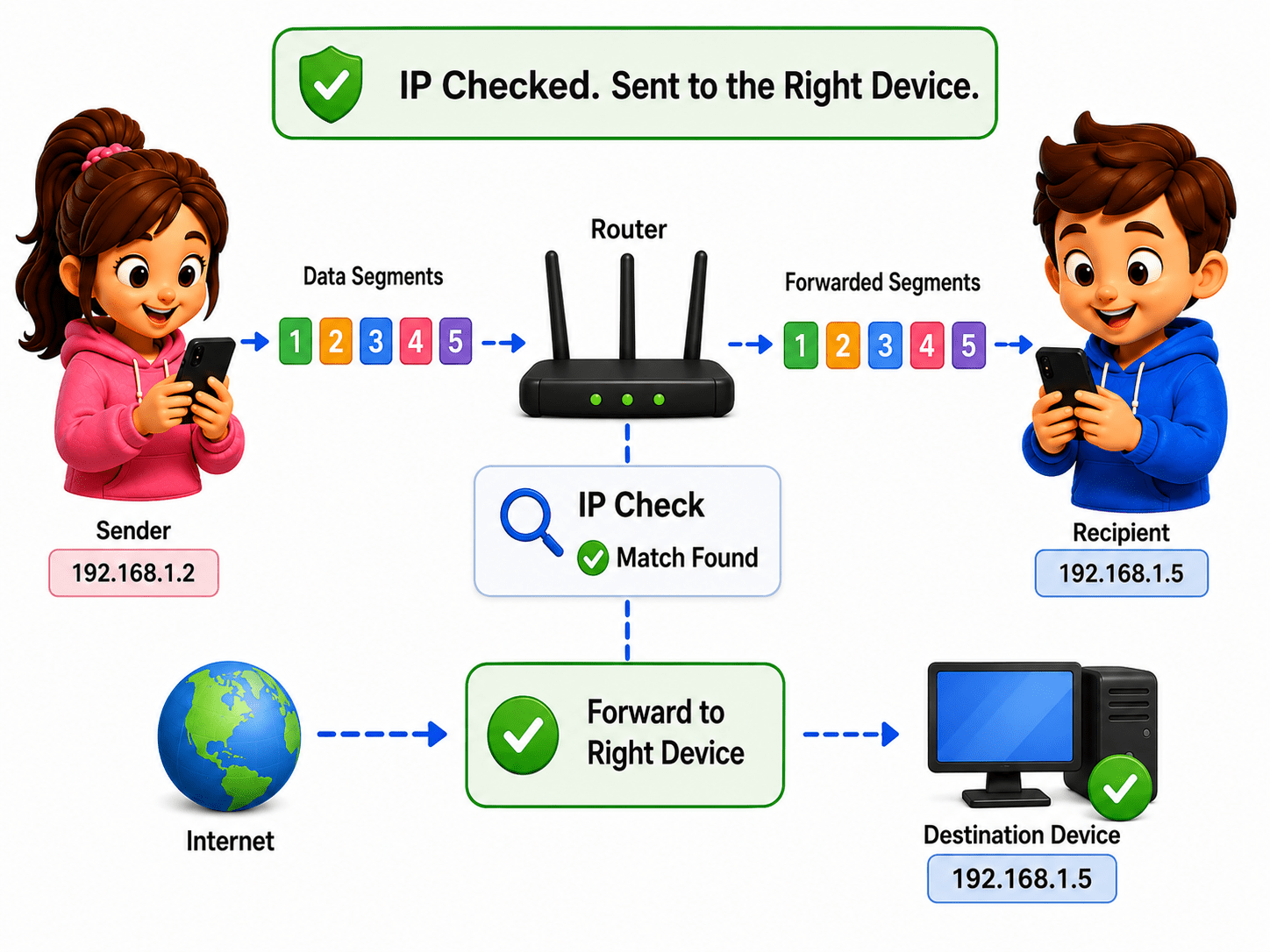
The Network Layer is responsible for sending data from one network to another using IP addresses. It decides the best path for data to reach its destination.
Uses MAC address
Handles switching & error detection
Example: Router deciding best path to send data
Network Layer (Layer 3):
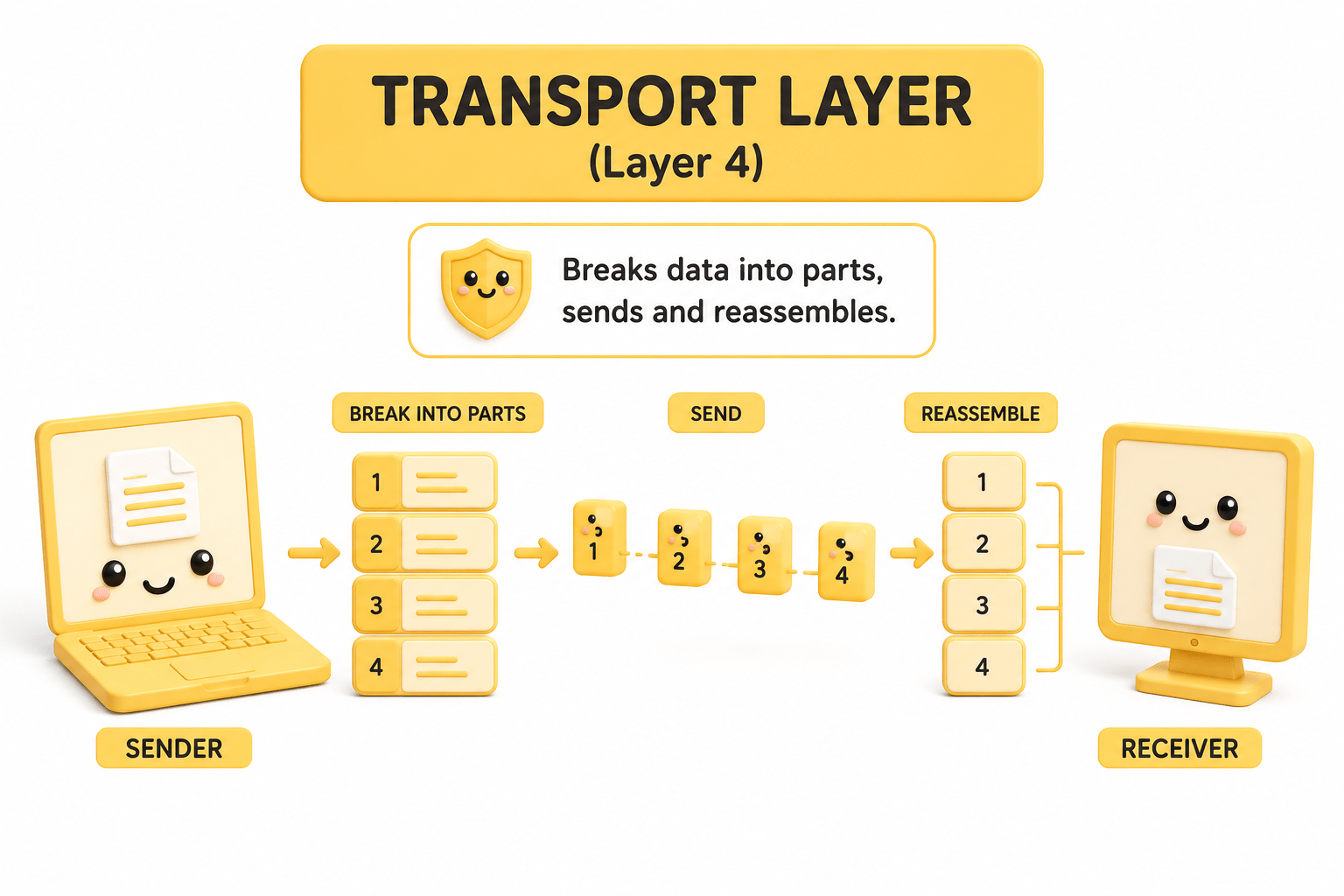
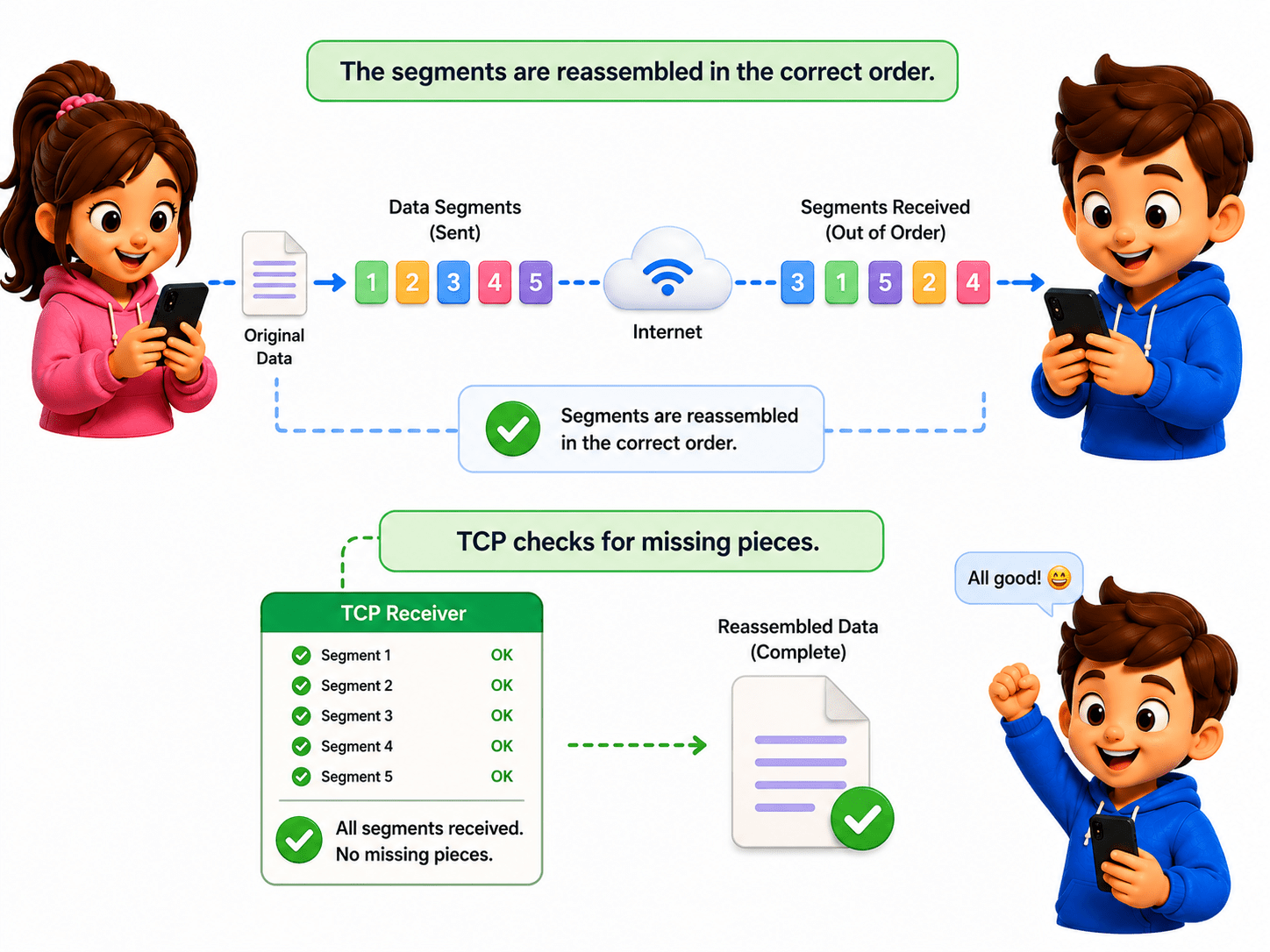
Ensures reliable data transfer, flow control, and segmentation (TCP/UDP). Provides end-to-end communication services, including segmentation, flow control, error detection, and reliable or unreliable data delivery between hosts.
Uses TCP/UDP
Ensures data is delivered correctly
Example: Breaking data into parts and reassembling
Transport Layer (Layer 4):
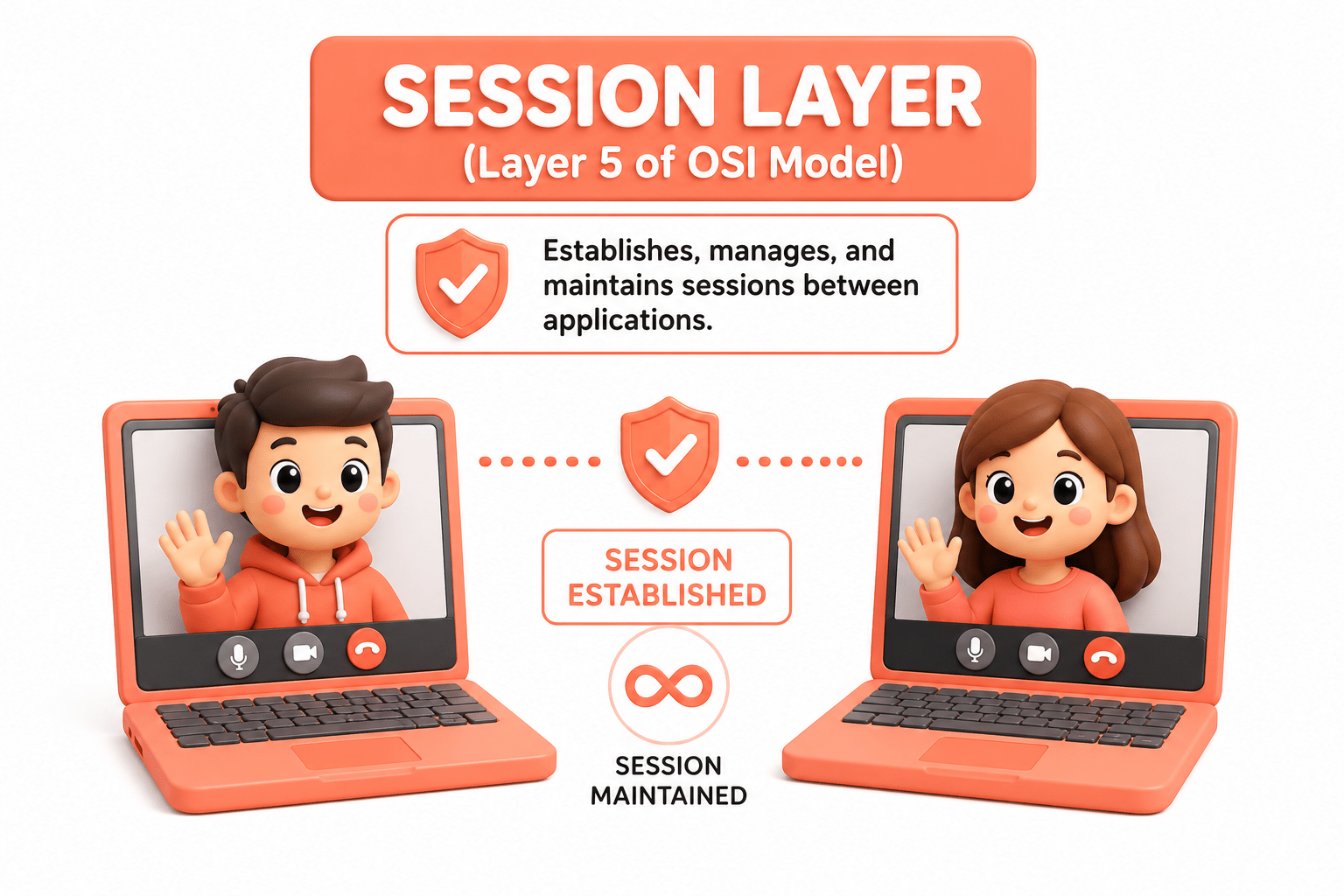
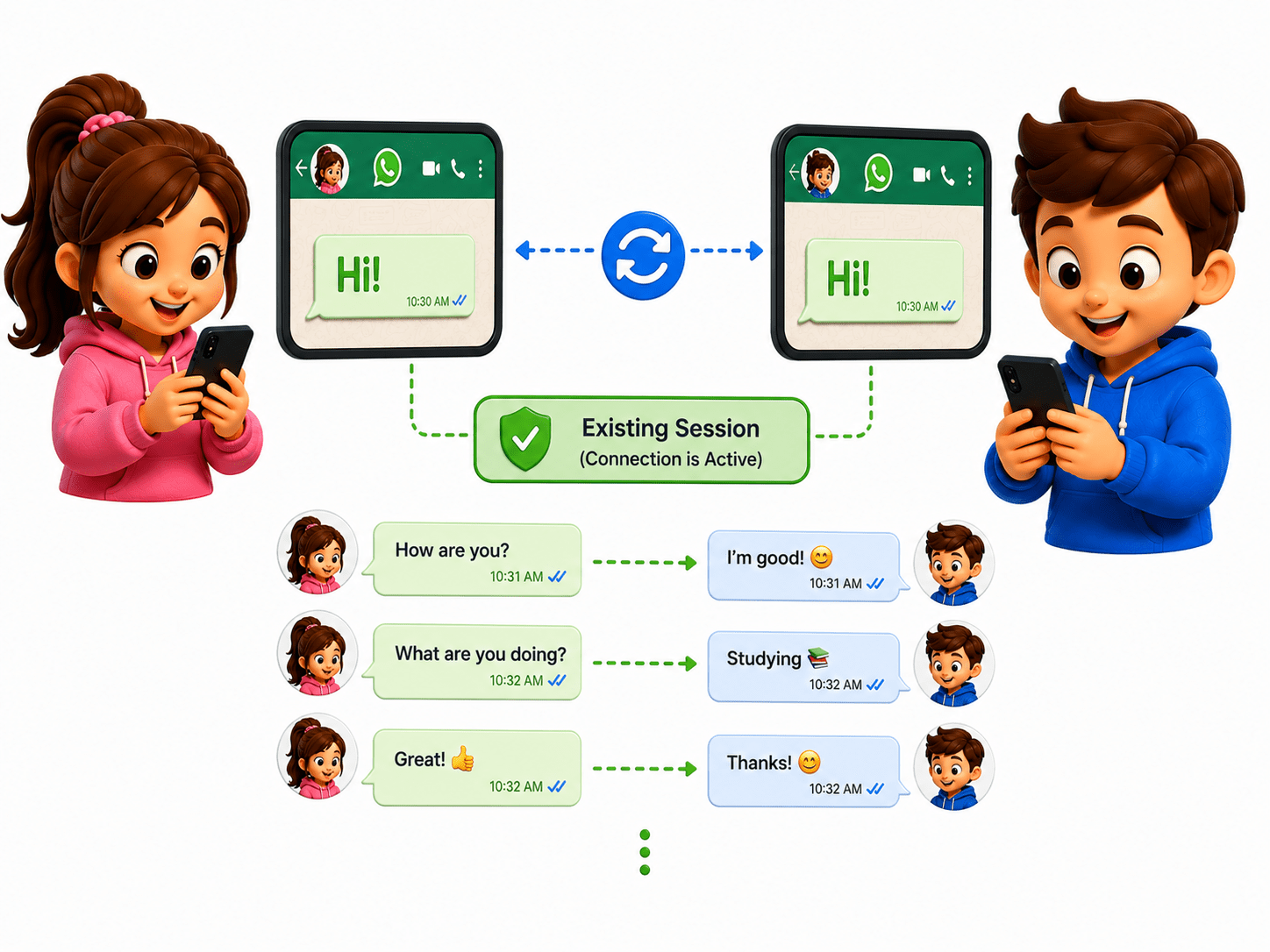
Manages sessions (connections) between applications. Establishes, manages, and terminates communication sessions between applications, including synchronization and dialog control.
Manages connection (start, maintain, end)
Example: Keeping a video call connected
Session Layer (Layer 5):
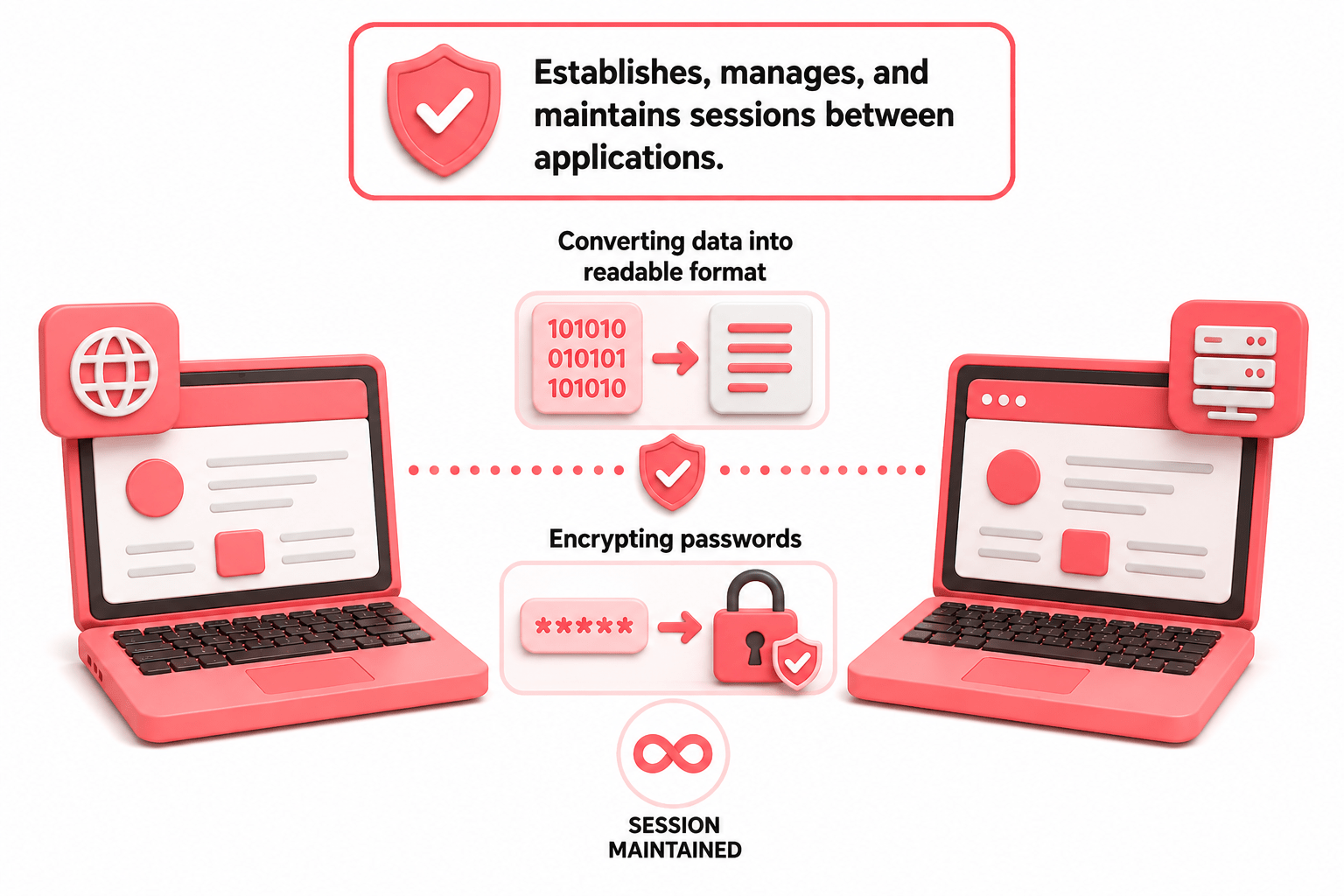
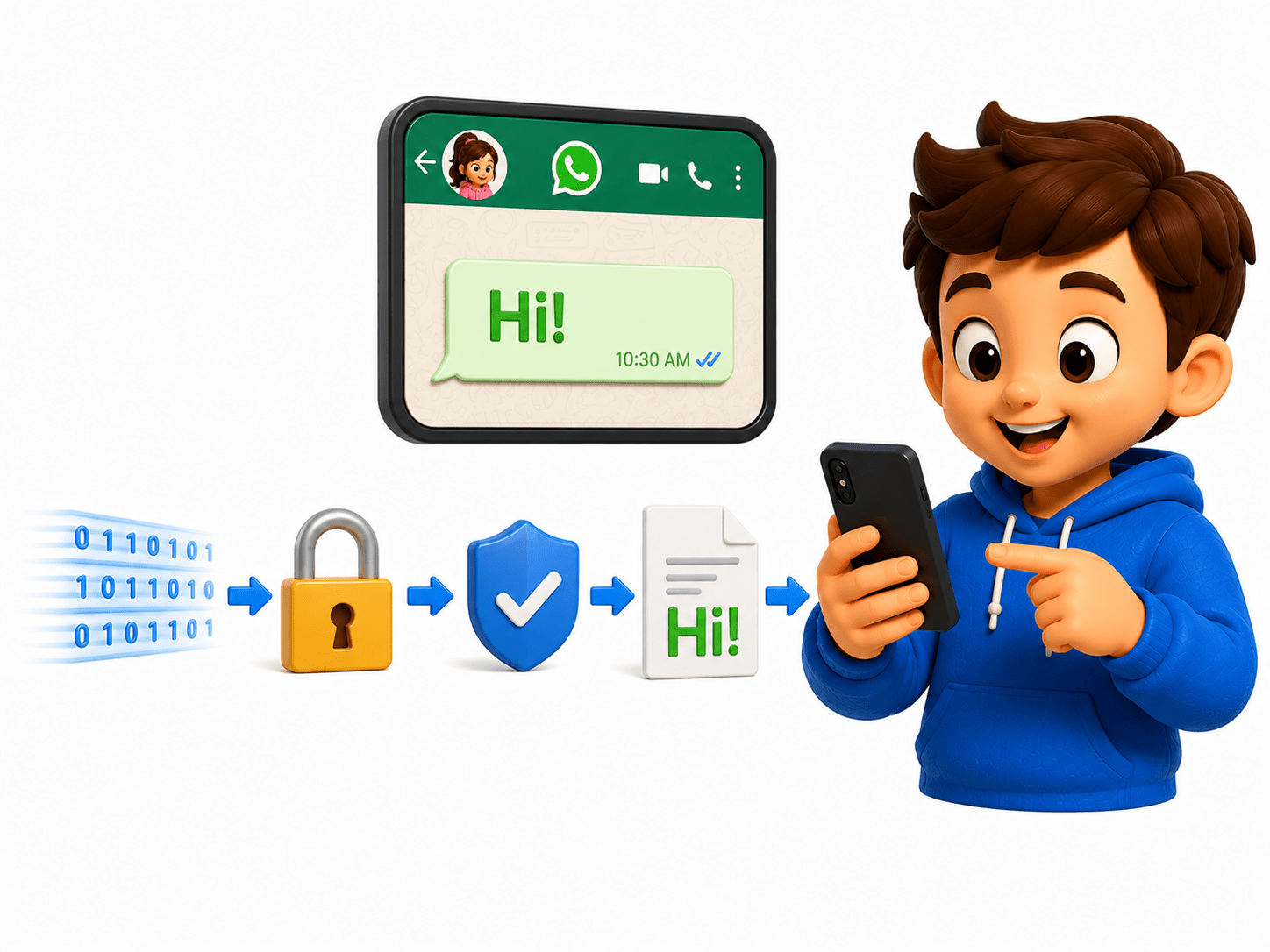
Handles data encryption, decryption, and formatting. Responsible for data translation, encryption/decryption, and compression to ensure that data is presented in a standard, usable format for the application layer.
Handles encryption & formatting
Example: Converting data into readable format, encrypting passwords
Presentation Layer (Layer 6):
Interfaces directly with user applications (HTTP, FTP, SMTP). Provides network services directly to end-user applications and facilitates communication between software processes over a network.
Closest to the user
Provides services like web, email
Example: Browser, WhatsApp, Gmail
Application Layer (Layer 7):
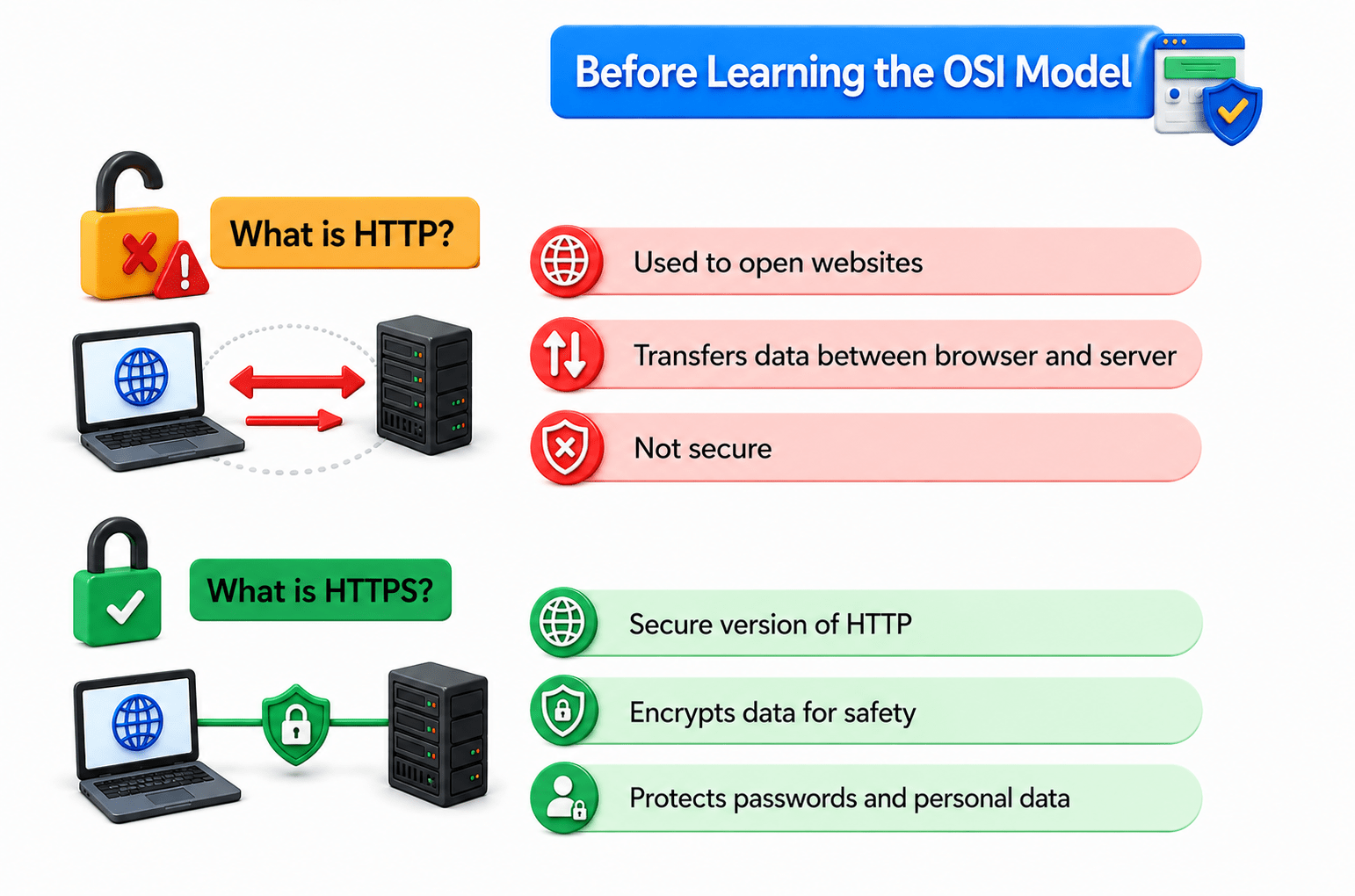
Browser
Converts web data(HTML,images,videos) into readable format
Encrypts messages and media to keep conversations secure
Gmail
Converts email content into readable text and secures it with encryption
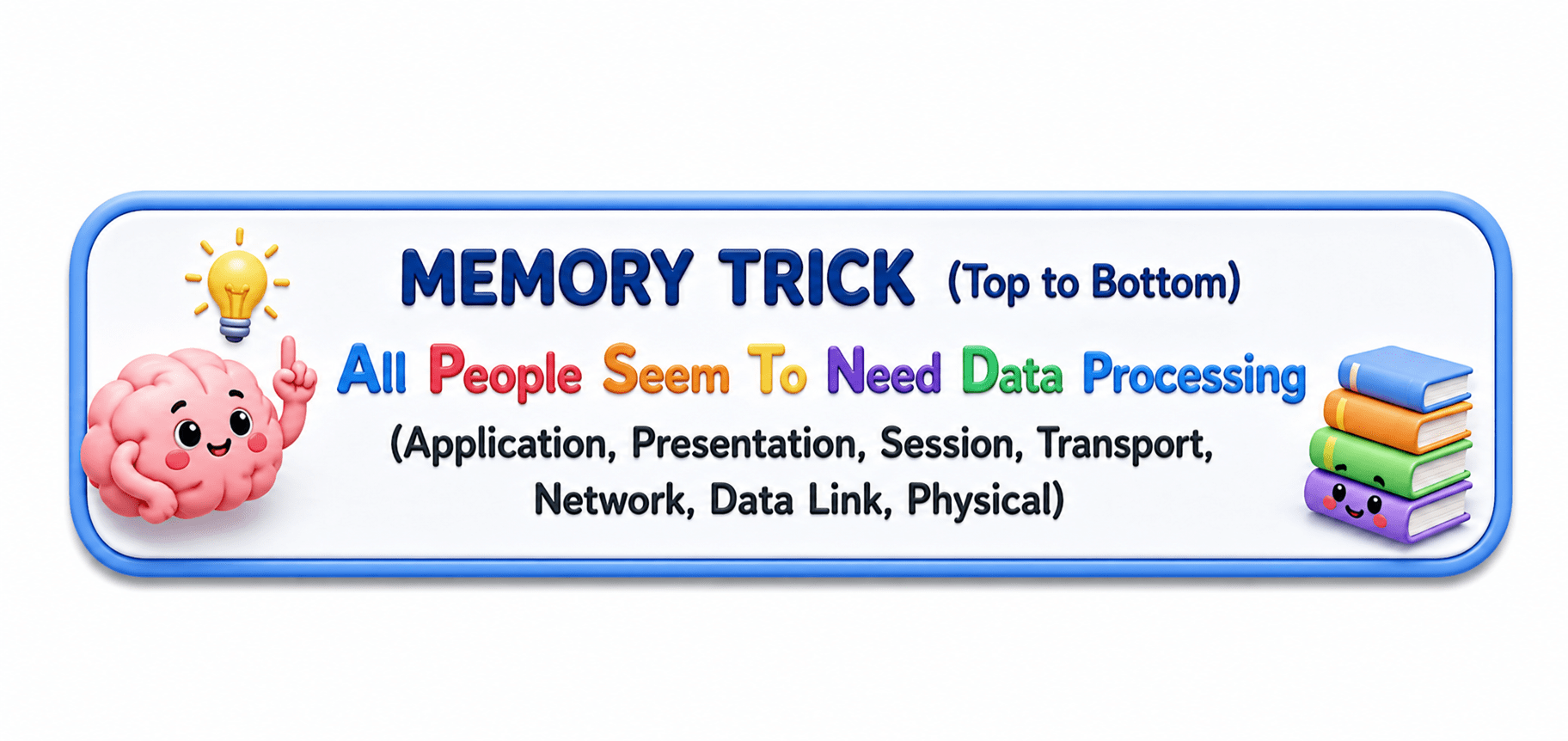
7 - APPLICATION LAYER
6 - PRESENTATION LAYER
SENDER: Your Phone
5 - SESSION LAYER
4 - TRANSPORT LAYER
Breaks data into smaller segments and ensures reliable delivery.
TCP checks if all data reaches correctly.
3 - NETWORK LAYER
2 - DATA LINK LAYER
Adds IP addresses and finds the best route to the destination.
Routers forwarding packets across the internet.
Adds MAC addresses and creates frames for local network communication.
Example: Ethernet and Wi-Fi communication.
1 - PHYSICAL LAYER
Converts data into electrical, optical, or radio signals for transmission.
Network cables, switches, radio waves.
RECEIVER: Friend’s Phone
7 - APPLICATION LAYER
6 - PRESENTATION LAYER
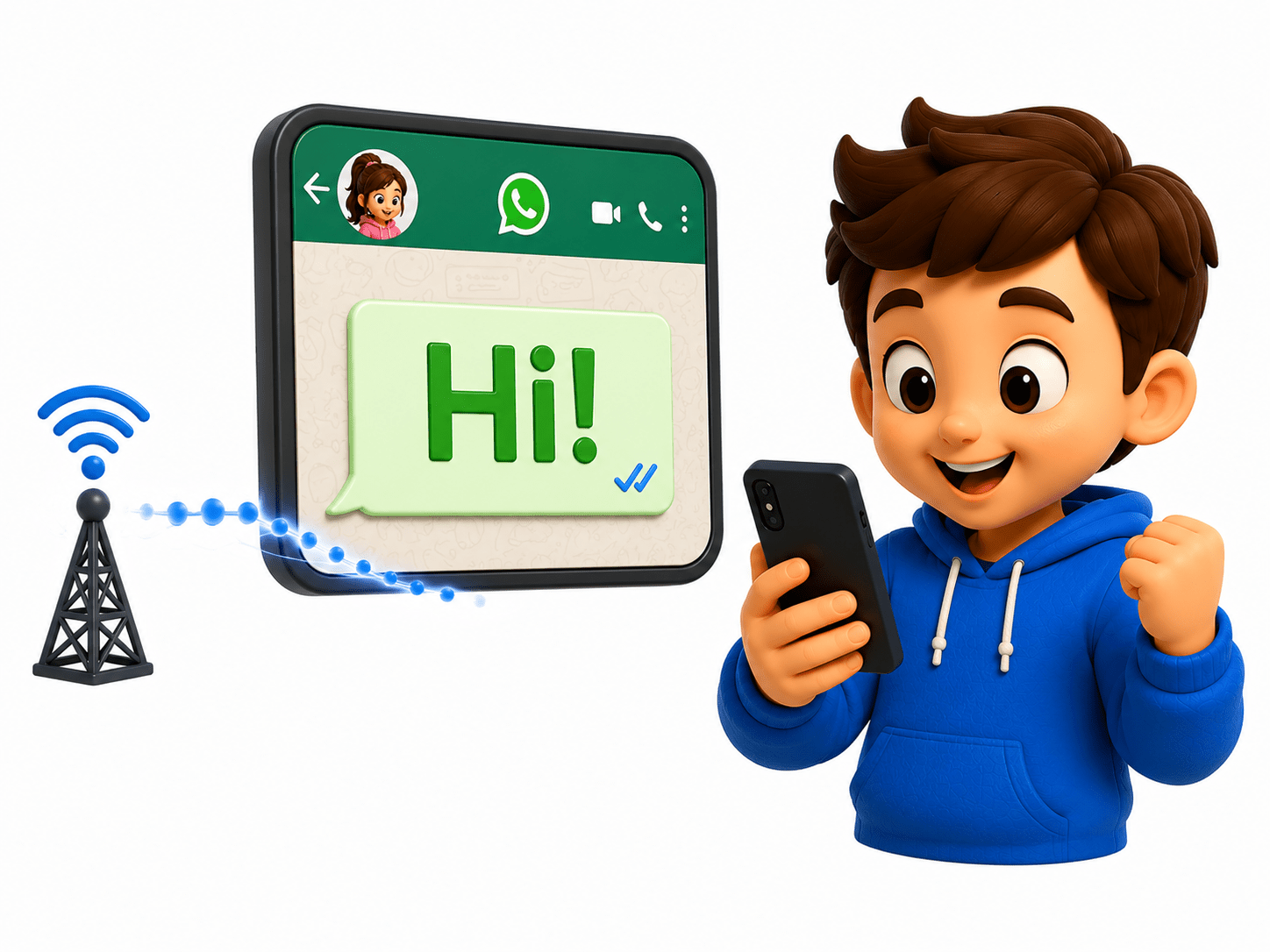
Delivers the final readable data to the user application.
Displaying WhatsApp message.
Decrypts and converts data into a usable format.
Decrypting whatsapp message
5 - SESSION LAYER
Maintains and manages the communication session.
Keeping chat sessions active.
4 - TRANSPORT LAYER
Reassembles segments and checks for missing or damaged data.
TCP ensuring complete file delivery.
3 - NETWORK LAYER
Reads IP addresses and delivers packets to the correct device.
Identifying destination IP address.
2 - DATA LINK LAYER
Checks frames for errors and reads MAC addresses.
Verifying data received from the local network.
1 - PHYSICAL LAYER
Receives raw signals and converts them back into bits (0s and 1s).
Receiving signals through cables or Wi-Fi.
Advantages of OSI Model
Simplifies complex network communication
Helps in troubleshooting (identify the layer of Issue easily)
Allows different vendors and technologies to work together.
Each layer can be developed, tested, and updated independently.
Good learning model for students and beginners.
Summary
5
It enables different devices to communicate using common protocols.
4
It helps identify network issues quickly.
3
Each layer has a specific networking function.
2
Layered architecture divides networking into smaller tasks.
1
OSI Model is a 7-layer framework for network communication.
Quiz
Which layer would you investigate if there is NO network signal at all?
A. Network Layer
B. Transport Layer
C. Physical Layer
D. Data Link Layer
Quiz-Answer
C. Physical Layer
Which layer would you investigate if there is NO network signal at all?
A. Network Layer
B. Transport Layer
D. Data Link Layer
By Content ITV